
Most home cooks think their food is missing salt. Usually, it’s just gasping for air.
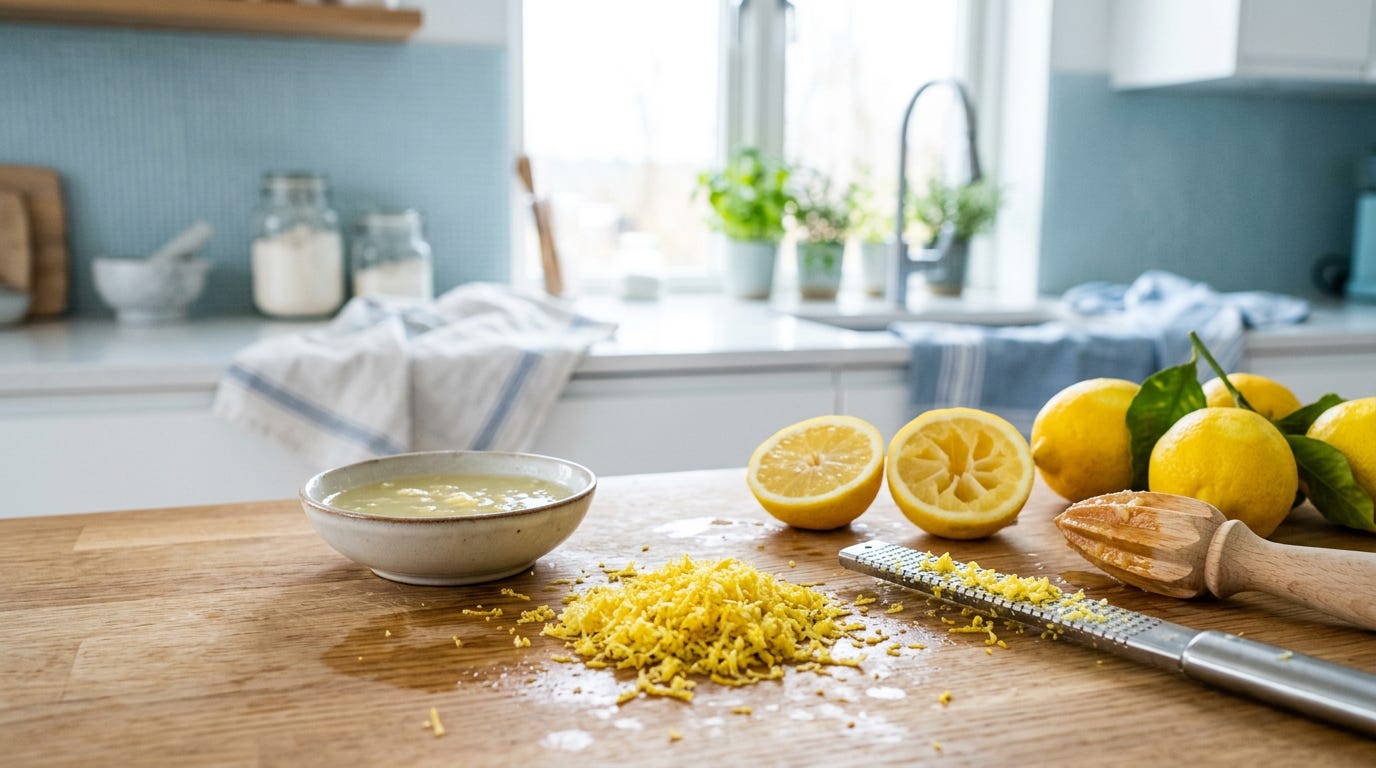
My mentor put it plainly one night after service: Salt is the floor you stand on. Acid is the window. And you have to know how to open it.
I didn’t fully understand that until I started teaching — until I watched home cook after home cook reach for the salt shaker over a dish that tasted flat. The salt never fixed it. The dish was already seasoned. What it needed was light.The 2026 Acid Moment — And What Nobody’s Teaching
Vinegar is everywhere right now. Shrubs, drinking vinegars, barrel-aged sherry vinegar on every restaurant menu in America. The food media is telling you to buy a better bottle.
What they’re not telling you is when and why to use it.
Fancy vinegar in the wrong moment still doesn’t work. Cheap white wine vinegar used correctly will change a dish entirely. The bottle isn’t the variable. The system is.
Here’s the thing: there are three forms of acid that matter in a hot kitchen. They’re not interchangeable. Each one has a different job. Each one belongs at a different moment in the cook.
The Three-Acid Framework
Wine — The Structure
Use wine early. After your aromatics soften, deglaze with it. Its job is to lift the fond — those browned bits of concentrated protein and sugar left from searing. Wine has the acidity to pull them off the pan and the body to incorporate them into your sauce. Water can’t do this. Plain water lacks both.
Sauvignon Blanc or Pinot Grigio. Dry vermouth in a pinch. Use something you’d drink. If it smells like vinegar before it hits the pan, it’s turned.
Vinegar — The Backbone
Vinegar is heat-stable. That’s the distinction nobody explains. You can add it to a simmering pan and it holds — it doesn’t blow off or evaporate. Its job is fat management.
A butter-based sauce without vinegar sits heavy on the palate. One tablespoon of sherry or white wine vinegar, added mid-cook while the vegetables are in the pan, and that same sauce finishes clean. The richness is still there — it just doesn’t coat your tongue and stay.
This is the difference between a sauce that lingers and one that finishes clean.
Citrus — The Highlighter
Citrus goes in last. Every time. No exceptions.
Citrus aromatic compounds are volatile — they evaporate fast under heat. Add lemon early and you lose everything interesting about it. Add it after the burner is off and those aromatics open up completely: floral, bright, alive.
The rule is simple: burner off, lemon on. Whether it’s fish, pasta, vegetables, or soup — citrus always goes in last, off the heat, right before you serve. Same fruit, different timing, completely different result.
Why Spring Is the Season That Rewards This Most
Spring produce is delicate. Asparagus, fresh peas, tender herbs that bruise if you look at them wrong — these ingredients don’t need heavy sauces or long cooking times. They need lift. They need architecture.
The Triple Acid system was built for exactly this season. When you season asparagus in a pan with heat-stable vinegar as it cooks, it finishes sharp and clean rather than steamed and flat. When you finish with citrus off the burner, the dish comes alive in a way that feels effortless but isn’t accidental.
Spring rewards technique more than any other season. This is the season to use it.
This Week’s Dish
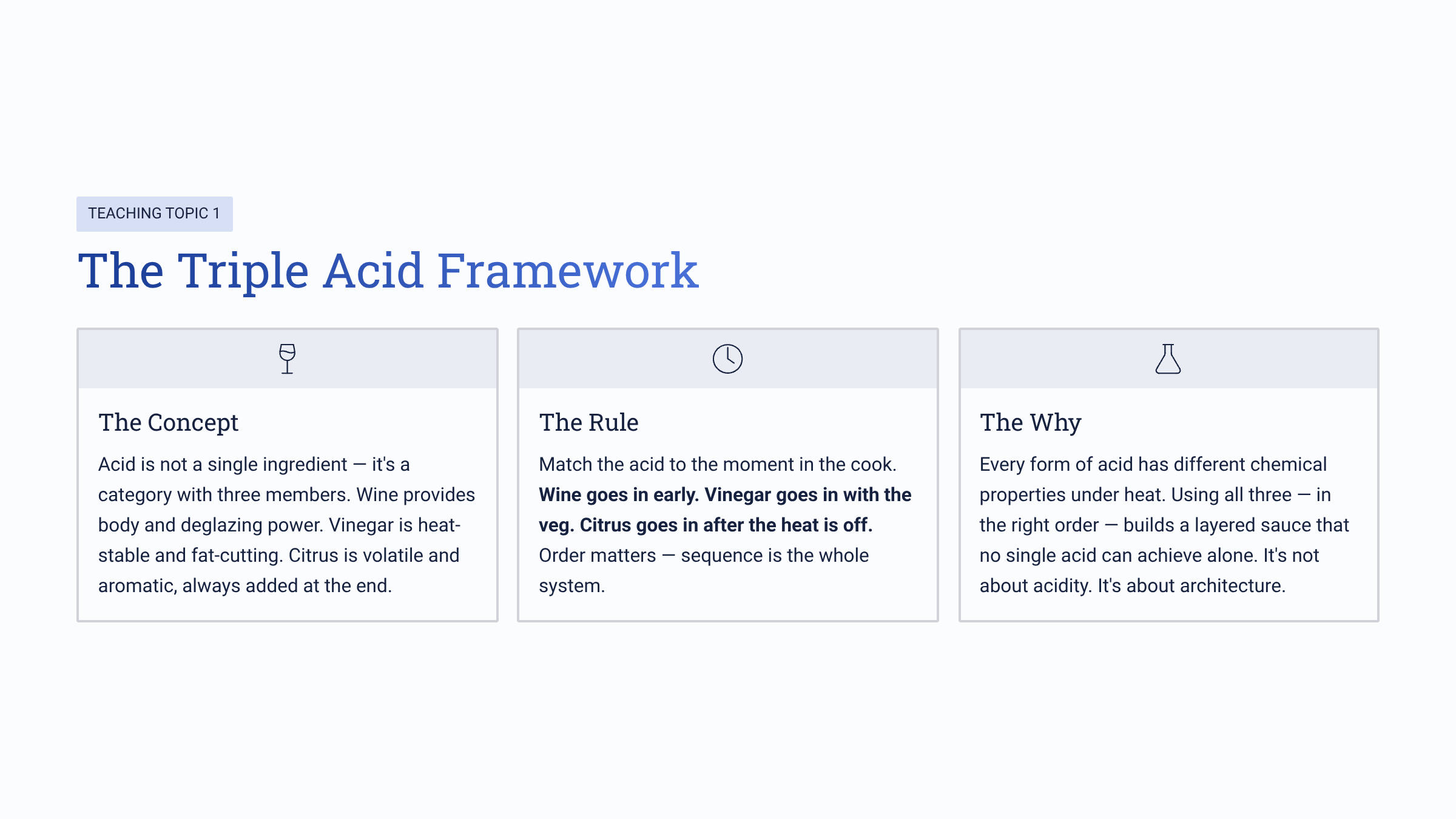
Spring Seafood Sauté — shrimp and white fish (cod, snapper, or halibut), asparagus, fresh peas, shallots, butter. All three acids, correct order, one pan, fifteen minutes.
A few things the recipe does that most recipes skip:
Salt only before searing. Pepper contains volatile aromatic compounds that burn at the high heat required to get a proper crust on fish. Burnt pepper turns bitter and you can’t reverse it. Season with salt, sear, add pepper after. Two jobs. Two moments.
Never wipe the pan between proteins. The fond on the bottom after the fish is concentrated Maillard flavor — the same glutamate depth you get from aged cheese or soy sauce. The wine goes in to lift it, not to clean the pan. Scrape every bit into the sauce.
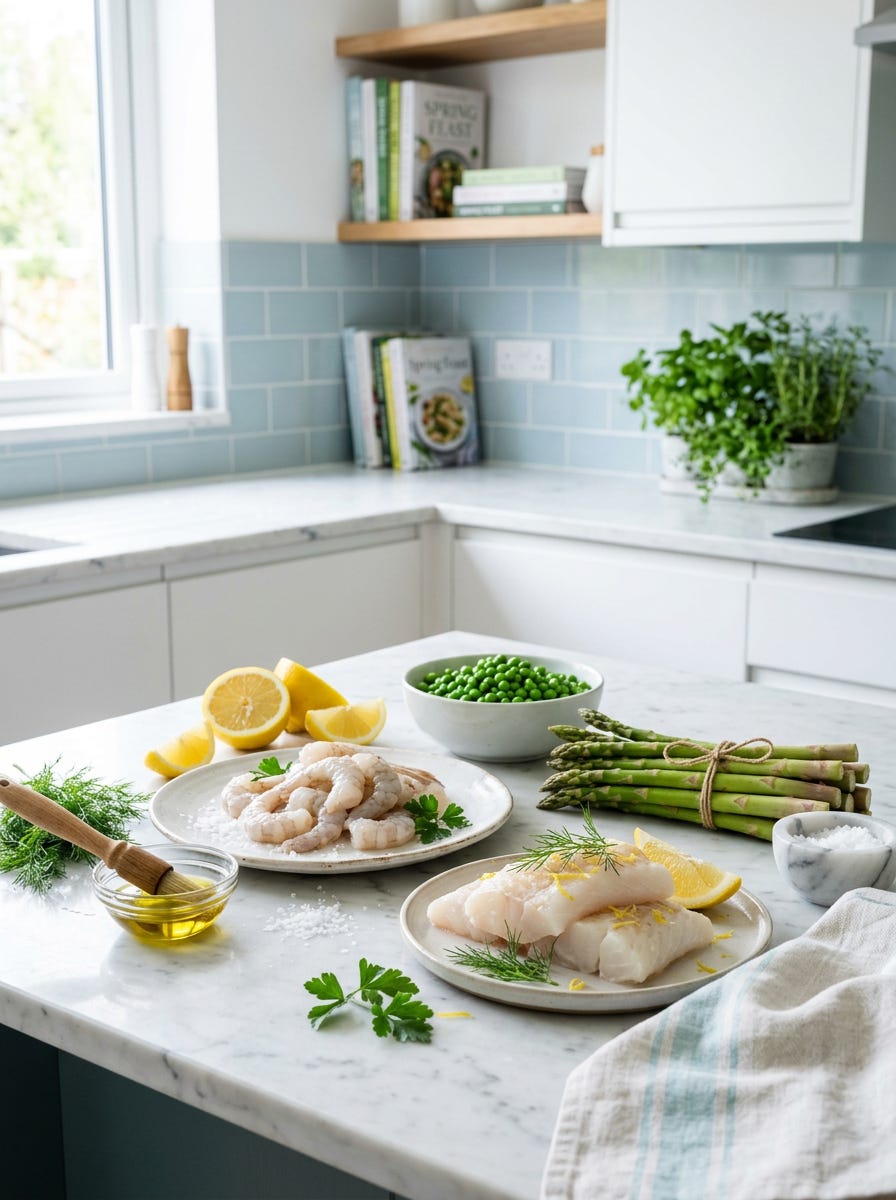
The lemon zest matters. The juice carries the acidity. The zest carries intense aromatic oils that don’t exist in the juice. Add both — right after the burner goes off.
The full recipe, the two leftover spin-offs (a pasta salad and tacos, each running a version of the Triple Acid system), the complete grocery list, and five downloadable teaching concepts are all in this week’s guide.

What You Actually Own After This
This isn’t a seafood recipe. It’s a system.
Every butter sauce you cook from here on — pasta, fish, chicken, vegetables — runs on the same three levers. Build structure with wine. Cut fat with vinegar. Finish with citrus. The proteins change. The ratios shift. The logic doesn’t.
Most recipes skip the map entirely and just give you the steps. The map is what matters.
Salt is the floor. Acid is the window. Now you know how to open it.
— Tyler | CulinaryBrief This week’s downloadable guide — The Triple Acid Week — includes all three recipes, the full grocery list, and five teaching topics. It’s in the paid archive.
Quick poll for the kitchen nerds:
What’s the acid you reach for most?
I default to white wine when I’m building a sauce and lemon juice as a finisher. But I’ve been using sherry vinegar more lately — it holds up under heat better than citrus and adds a depth that regular white vinegar doesn’t.
What’s yours? And do you add it during cooking or at the end?