
You did everything right.
You cooked on Sunday. You portioned everything out. You stacked your containers in the fridge and felt genuinely good about the week ahead.
By Wednesday, the chicken is dry. The grains are mushy. The vegetables are soggy. And you’re ordering delivery again.
Here’s the thing — your cooking isn’t the problem. Your storage is.
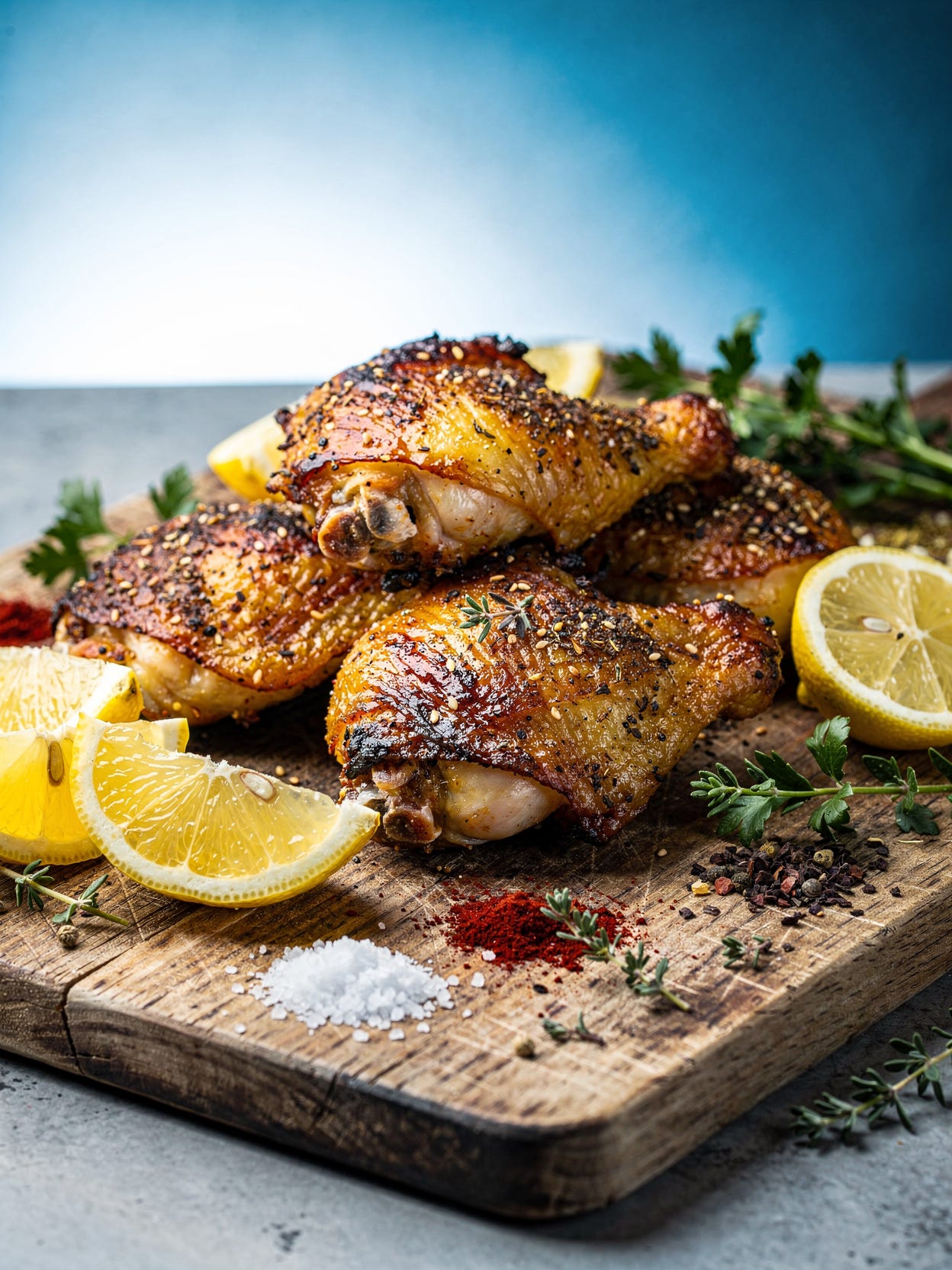
After 15 years in professional kitchens, I can tell you that restaurants cook food days in advance and serve it tasting fresh. They’re not using magic ingredients or industrial equipment. They’re following a storage system that most home cooks have never been taught.
Here are the three rules that change everything.
Rule 1: Never seal hot food
When you put hot food directly into a sealed container, you trap steam. That steam becomes condensation. That condensation sits on your chicken, your rice, your roasted vegetables — and turns everything soft, wet, and stale faster than it should.
In restaurant kitchens, cooked food always cools before it’s sealed. It’s not about food safety alone. It’s about texture and shelf life.
The fix is simple: let your batch-cooked food rest uncovered for 20-30 minutes before you put the lid on. If you’re in a hurry, spread it on a sheet pan — it cools in half the time.
Rule 2: Wet and dry never share a container
This is the single biggest mistake I see in home meal prep. Dressed salads. Sauced grains. Proteins stored in their own juices. Everything combined into one container for the sake of convenience.
By day two, the sauce has soaked into the grain, the grain has absorbed the protein’s moisture, and the whole thing tastes like one uniform texture instead of a meal.
Professional kitchens store components separately and combine them at service. You should do the same.
Store your proteins in one container. Grains in another. Sauces and dressings in small jars. Dress nothing until the moment you eat it. Assembly takes 90 seconds. The payoff is food that still has distinct textures and flavors on Friday.
Rule 3: Sequence your week by ingredient durability
Not all batch-cooked food ages at the same rate. This is something restaurants plan around and home cooks rarely think about.
Delicate ingredients — fresh herbs, leafy greens, anything with a yogurt or citrus dressing — go earlier in the week. Sturdy ingredients — roasted proteins, legumes, braised meats, pickled vegetables — hold well toward the end.
When you plan your week this way, Friday’s meal doesn’t feel like you’re eating old food. It feels intentional. Because it is.
This week’s system: Za’atar Roasted Chicken Thighs
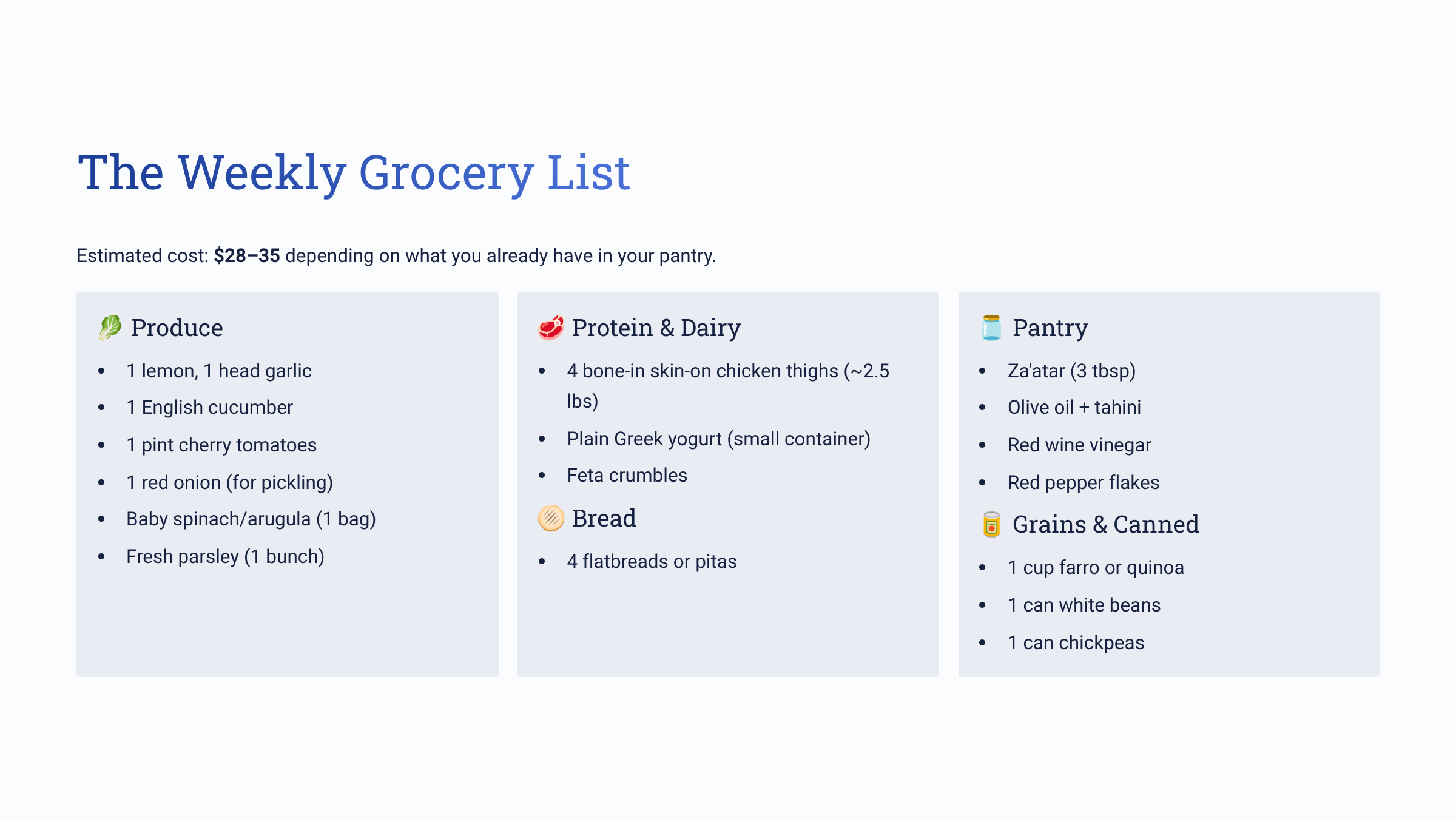
All three of these rules show up in this week’s OneBatch system. One batch of za’atar roasted chicken thighs — cooked Sunday, cooled properly, stored in components — becomes four distinct meals across the week.
The base recipe is below. The roasting juices get stored separately in a small jar. By Thursday, that jar becomes the broth for a 15-minute white bean soup. By Friday, the last of the chicken goes cold over a fresh mezze salad — no reheating required, which is exactly the right call at the end of the week.The four spin-off meals:
Monday — Za’atar Chicken Grain Bowl. Sliced chicken over farro with cucumber, cherry tomatoes, pickled red onion, and lemon-yogurt sauce. Sauce stored separately, added at the table.
Wednesday — Chicken and Roasted Veggie Flatbread. Pulled chicken on warmed pita with tahini, roasted peppers, and arugula. Built fresh, not pre-assembled.
Thursday — Quick White Bean Soup. Shredded chicken in the reserved roasting juices with white beans, spinach, and lemon. Ready in 15 minutes because your protein is already done.
Friday — Cold Mezze Salad. Chopped cold chicken with chickpeas, olives, feta, and herbs. No reheating. Dressed only when you eat it.
One prep session. Four meals. Total active cooking time across the week: under 25 minutes.

If this is the kind of system that would help someone you know maybe a friend who keeps giving up on meal prep, a partner who relies on delivery, anyone who’s ever thrown out a container of sad-looking chicken on Thursday — forward this to them.
This is exactly the kind of thing that’s easier to learn once from someone who knows it than to figure out through a week of soggy lunches.
See you next Thursday.
— Tyler
P.S. Reply and tell me which meal you’re planning to make first. I read every response.
Airtight Glass Storage Containers The containers you use matter more than most people think. I use glass for batch-cooked proteins and grains — they don’t absorb odors, they go from fridge to microwave without re-plating, and a proper airtight seal is what actually keeps food fresh through Friday. These are the ones in my kitchen.
Za’atar Spice Blend If you can’t find za’atar locally, a good quality blend makes a real difference — it should smell herby and bright, not dusty. This is the one I’d reach for.
Instant-Read Meat Thermometer The single tool that prevents dry chicken more than anything else. Pull thighs at exactly 165°F and rest them — that’s the whole secret. I’ve used one in every kitchen I’ve ever worked in.
A note on the links above: some of these are affiliate links, which means I earn a small commission if you purchase through them — at no extra cost to you. I only recommend tools and ingredients I actually use. Affiliate revenue helps keep this newsletter free every Thursday.