
THE ONE BAG TRIP
Most people don’t leave the grocery store with too little food. They leave with $90 worth of ingredients and no real plan for what they’re actually cooking this week.
That’s not a budget problem. That’s a system problem — and it’s one professional kitchens solved a long time ago.
What they don’t teach you about grocery shopping
In a professional kitchen, nobody wanders. Every cook has what we call a path of travel — a deliberate sequence for how you move through the space to avoid wasted steps and doubled-up effort. The prep cook who laps the kitchen three times grabbing ingredients they forgot doesn’t last long on a busy line.
Most home cooks do the grocery store version of this every single week. The list is organized by what you remembered to write down, not by how the store is laid out. You hit produce, double back for dairy, realize you forgot garlic, somehow end up in the chip aisle. Forty-five minutes later, you’re tired before you’ve cooked a single thing.
Here’s the fix: build the meals first. Then write the list.
This is what I call The Chef’s Walk — and it changes how fast and how cheaply you get dinner on the table.
How The Chef’s Walk works
Before I write anything down, I identify the three meals I’m building this week. Then I map every ingredient across all three. If something only shows up in one meal, it earns a second job or it gets swapped for something more versatile.
Nothing comes home to rot in the back of the fridge by Thursday. Every item on the list is pulling its weight.
This week’s system is built around one protein (chicken thighs), one grain (linguine), and four shared ingredients — garlic, lemon, Parmesan, arugula — that each appear in two or three of the meals. That’s how restaurant kitchens control cost and eliminate waste. The same logic works at home.
Here’s how the bag breaks down:
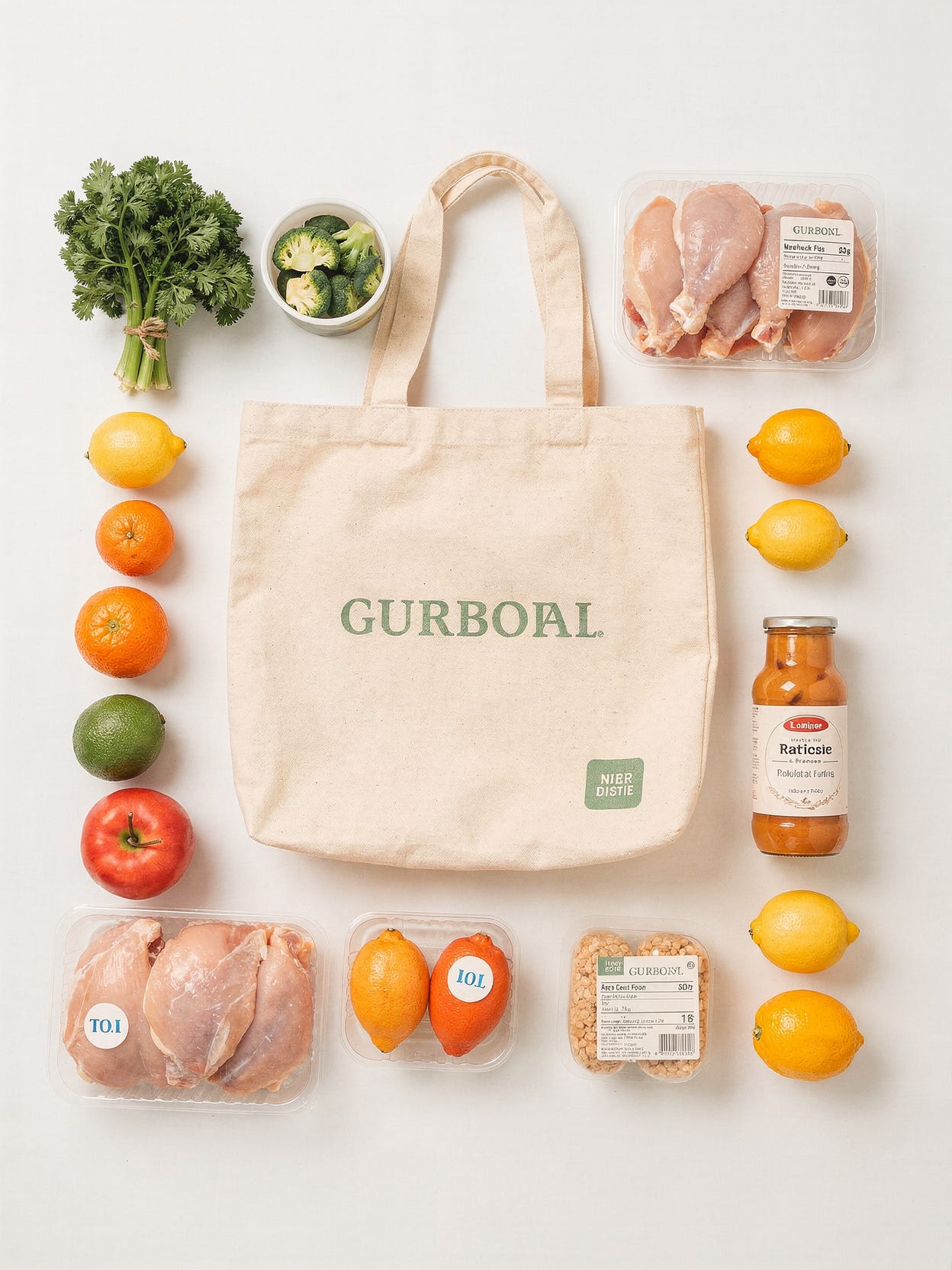
Zone 1 — Produce (heaviest, goes in the bag first) 1 bunch asparagus · 1 bag pre-washed arugula · 3 lemons · 4 garlic cloves
Zone 2 — Protein & Dairy (middle of the bag) 1 lb bone-in, skin-on chicken thighs · 1 small block Parmesan (4 oz)
Zone 3 — Pantry (lightest, on top) 1 box linguine · 1 small jar capers
The bag is organized the same way a well-run store is laid out. You walk one direction. No doubling back.
Total at checkout: approximately $28–32. Update this to your actual receipt — that number being real is what makes this useful.
The three meals this bag builds
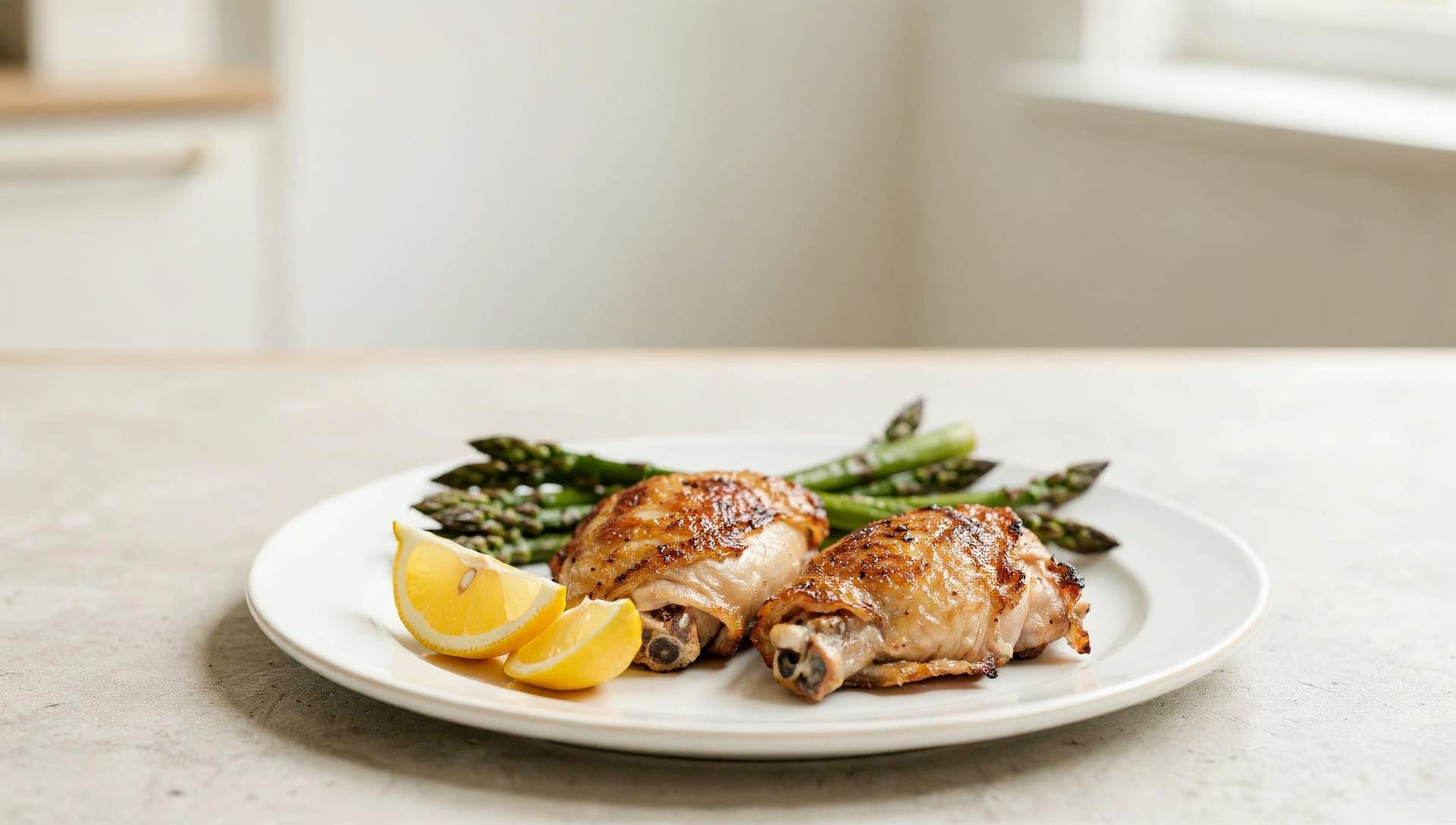
Meal 1 — Lemon Garlic Chicken with Roasted Asparagus
This is your anchor. Sear the chicken thighs skin-side down in a cold pan and let the heat come up together — this is how you render the fat without burning the skin. Once golden (about 8 minutes), flip and finish in a 400°F oven for 12–15 minutes. Pull at 165°F internal. Rest 5 minutes before slicing.
While the chicken rests, the asparagus goes on a sheet pan at 425°F for 12 minutes. Single layer only — crowding creates steam, not roast. Squeeze lemon over everything when it comes out.
The fond left in the chicken pan — those brown bits — gets deglazed with lemon juice and a knob of butter. That’s your sauce. Takes 90 seconds and tastes like something from a restaurant.
Meal 2 — 15-Minute Lemon Butter Pasta
This is the pantry meal. Nothing new required — everything comes from the bag you already bought.
Salt the pasta water until it tastes like the sea. Not a pinch. A real handful. Cook the linguine to package time, but before you drain it, pull out half a cup of pasta water. That starchy liquid is what binds your sauce and keeps it from breaking.
Finish the pasta in the pan with butter, Parmesan, capers, lemon juice, and a splash of that pasta water. Toss until glossy. The capers do double duty here — brine is flavor and salt at the same time, so you need almost nothing else.
Done in the time it takes to boil water.
Meal 3 — Arugula & Chicken Salad with Shaved Parmesan
This one requires no cooking at all. Leftover chicken from Meal 1, sliced cold. Arugula dressed simply with lemon juice, olive oil, salt, and pepper. Parmesan shaved over the top with a vegetable peeler, not grated — you want those wide, thin ribbons that fold into the leaves.
Eight minutes from fridge to table. This is the meal that proves the system works: the hard work is already done.
What you just learned
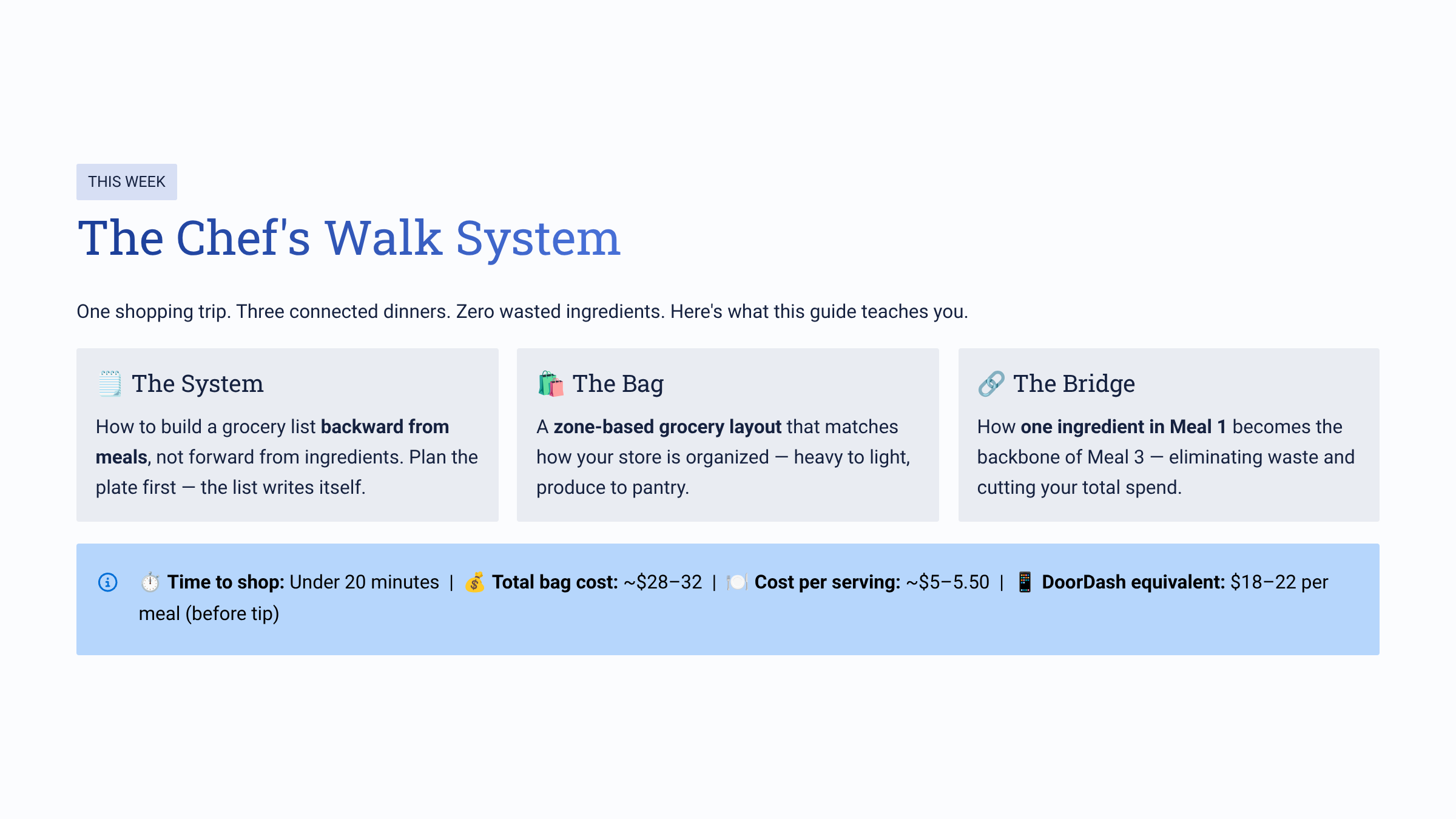
The Chef’s Walk isn’t about being organized for the sake of it. It’s about designing your week before you go shopping so that every cook session builds on the last one. Meal 3 takes 8 minutes because Meal 1 did the work. The effort compounds.
This is how restaurant kitchens stay efficient at volume. It scales down to your kitchen perfectly.
Three dinners for 2 people at ~$5–5.50 per serving. The same meals ordered through a delivery app would run $18–22 per meal before tip. The difference isn’t the food — it’s the system.
Comment ONEBAG below and I’ll send you the full PDF — the complete grocery zone layout, all three recipes with exact steps, and a storage guide so nothing goes to waste.
What’s the one thing that usually derails your grocery trip — the list, the store, or figuring out what to cook in the first place?
P.S. Reply and tell me what your weekly grocery spend currently looks like. I’m building something around that data and your answer matters.
One bag