
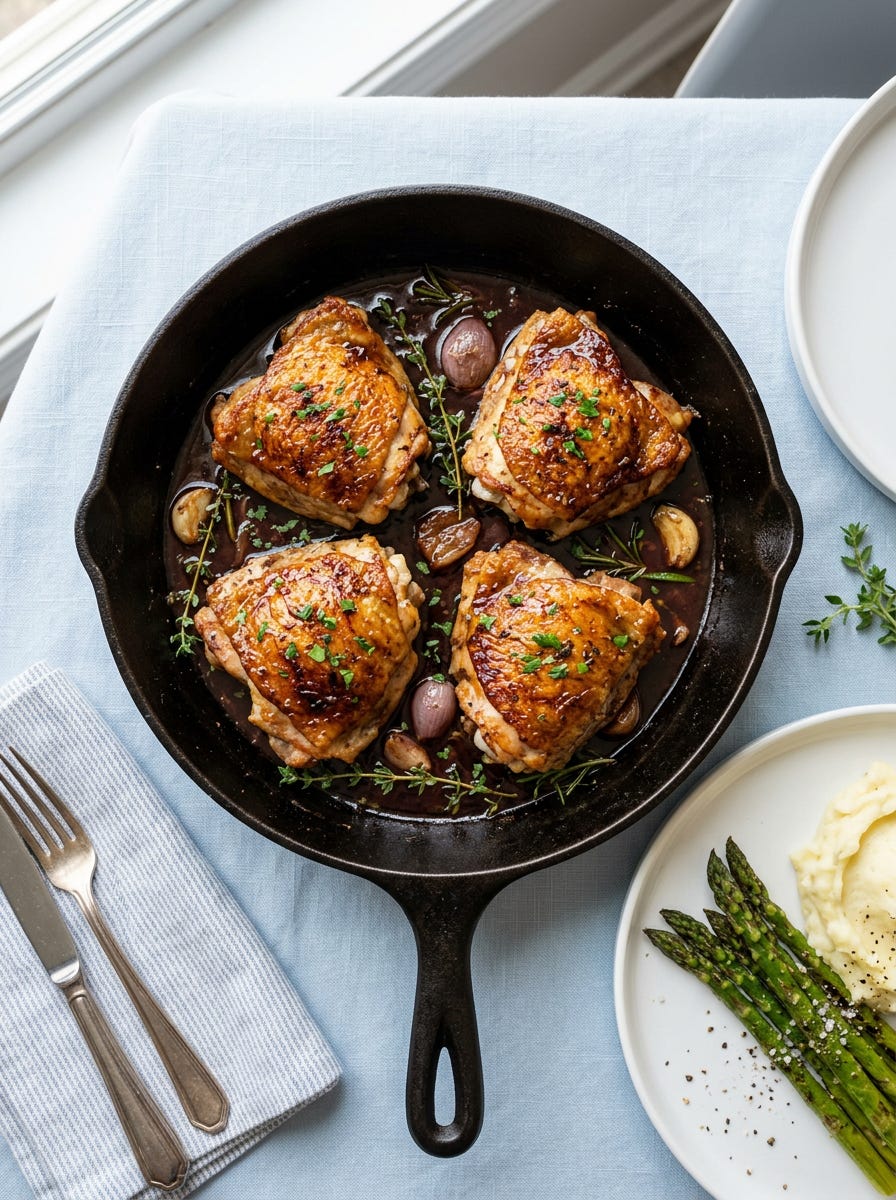
Every home cook has been there. You just seared a beautiful piece of chicken, the pan has all those brown bits stuck to the bottom, you add wine or stock, it smells incredible — and then you add butter and it completely falls apart. Greasy. Separated. Nothing like the glossy sauce you were picturing.
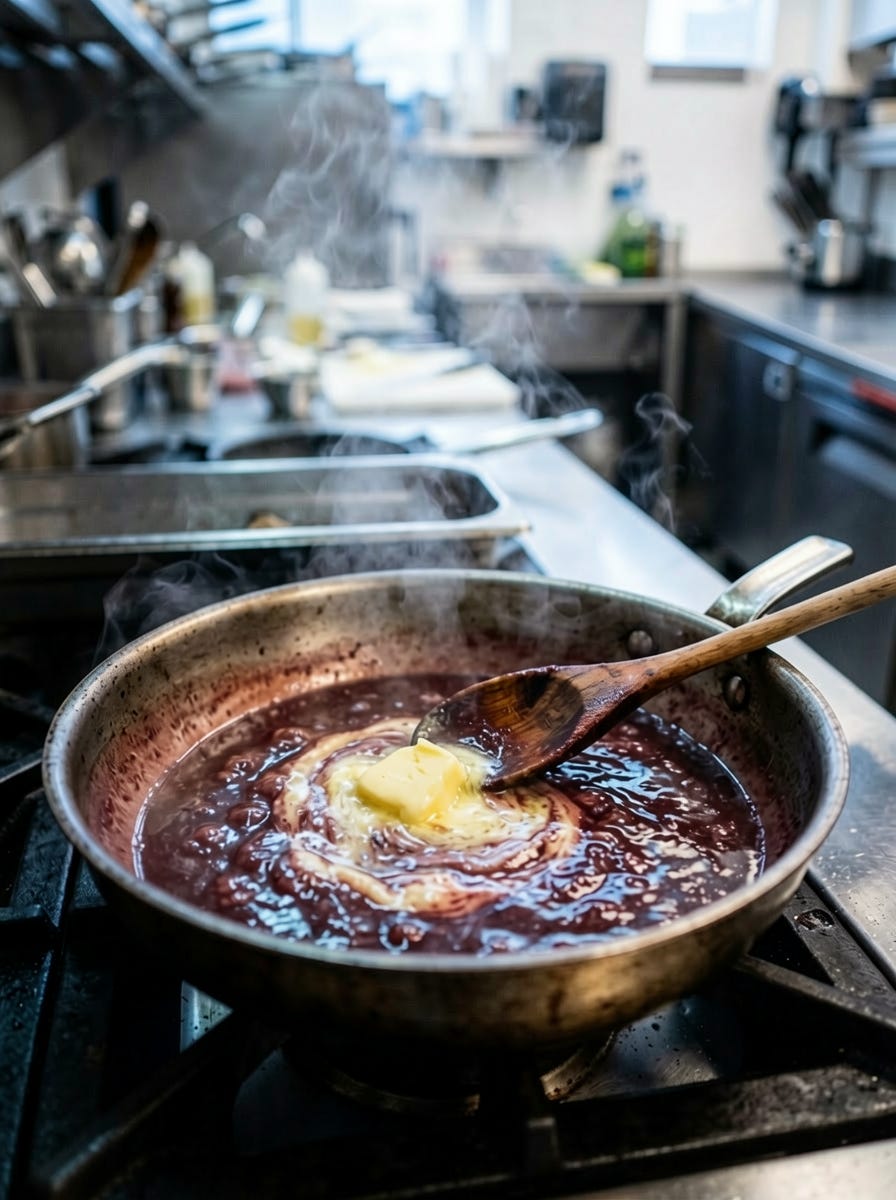
That’s not a technique failure. That’s a physics problem. And once you understand it, you’ll never break a pan sauce again.Here's the thing: a pan sauce is an emulsion. Fat and water don't naturally combine — they repel each other. What holds them together is constant motion, the right temperature window, and cold fat added at the right moment. Break any one of those three, and the sauce breaks with it.But first — the sauce starts before the sauce
Those brown bits stuck to the bottom of your pan after searing? That’s called fond. It’s not burnt food. It’s not something to scrub off. It’s concentrated, caramelized protein and sugars — and it’s the entire flavor foundation of your sauce. Every restaurant pan sauce in the world starts with fond. If you’re washing that pan before making your sauce, you’re literally pouring the best part down the drain.
And if you want good fond, you need dry skin. Pat your chicken completely dry with paper towels before it hits the pan. Both sides. Moisture is the enemy of a sear — wet skin steams instead of browning, and steamed skin doesn’t leave fond. Five seconds with a paper towel is the difference between a rich sauce base and a pan with nothing to work with.
The three ways it falls apart — and why
Too much heat. This is the most common one. When the pan is too hot and you add butter, the fat melts faster than it can incorporate. The water evaporates before the emulsion has a chance to form. You end up with a greasy puddle instead of a sauce. In a professional kitchen, we pull the pan off the heat or drop it to the lowest possible setting before the butter ever goes in.
Cold butter added wrong. Butter needs to be cold — that part people usually get right. What they miss is how it’s added. Dropping in a whole knob at once shocks the emulsion. Cut your butter into small pieces, add one at a time, and keep the pan moving. The gradual temperature change is what holds everything together.
You stopped moving. An emulsion needs agitation to stay stable. The moment you set the pan down and walk away, the fat and liquid start to separate again. You’re not just cooking the sauce — you’re physically holding it together through motion.
The 30-second rescue
If your sauce has already broken, don’t pour it out. Take the pan completely off the heat. Let it cool for 15–20 seconds. Add a small piece of cold butter and swirl — not stir, swirl. The circular motion in a tilted pan creates the right flow pattern for fat to re-incorporate. Most broken sauces come back within 30 seconds of doing this correctly.
The reason this works is temperature. A broken sauce has usually overheated and lost the emulsion. Dropping the temp and re-introducing cold fat gives you the window you need to rebuild it.
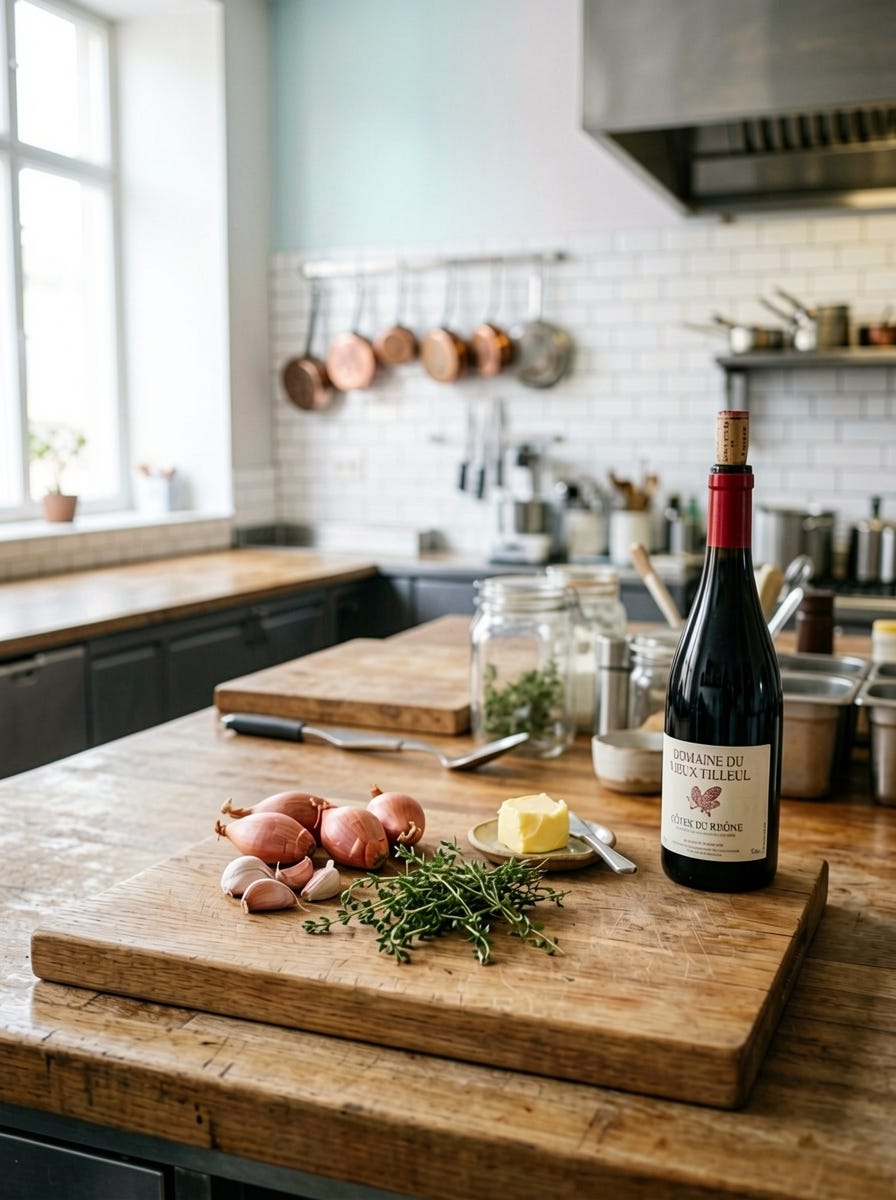
In a professional kitchen, we don’t really worry about broken pan sauces because we control the heat before it becomes a problem. The technique is boring: reduce your stock or wine first with the heat on, then take the pan completely off the burner, wait a beat, add cold butter in small pieces, and swirl until it tightens. That’s it. No finishing over high heat. No rushing it.
The glossy restaurant pan sauce you’re trying to replicate isn’t the result of a special ingredient or a better recipe. It’s the result of a cook who knows exactly when to pull the pan off the flame.
One more thing most people don’t know
If you’re making this ahead or you have leftovers — store the sauce separately from the protein. When you reheat it, do it gently in a small pan over low heat and swirl in a small piece of cold butter right at the end. That re-emulsifies the sauce and brings back the gloss. Microwaving the sauce on top of the chicken is how you end up with a greasy puddle all over again. This is what restaurants do during service — sauces get re-finished to order, not reheated in bulk.
Most recipes skip that part. Now you know it.
This week’s recipe card: Chicken Thighs with Red Wine Pan Sauce — plus two spinoffs that use the same technique with pork chops and salmon. Download below.

If you know someone who’s been frustrated by their sauces breaking, send this to them. This is exactly the fix they need — and it takes 30 seconds to forward.
TOOLS WORTH HAVING
These are the three tools that make pan sauce work. If you’re cooking on non-stick, the technique in this post won’t work — fond doesn’t form on coated pans.
12-inch Stainless Steel Skillet — The foundation of every pan sauce. Stainless builds fond; non-stick doesn’t. If you only upgrade one piece of cookware this year, it’s this.
Instant-Read Thermometer — Pull chicken at 165°F, pork at 145°F. No guessing, no cutting into the meat to check, no overcooked protein before your sauce even starts.
Fish Spatula — Thin enough to get under seared skin without tearing, flexible enough to flip a salmon fillet in one clean move. The right tool for every protein in this week’s card.
→ Build fond (sear hard, don’t touch it)
→ Deglaze (wine or stock lifts the browned bits)
→ Pull off heat 10–15 sec, then cold butter one piece at a time
→ Swirl the pan. Never stir.