
You know salmon is good for you. You know it cooks fast. You know it's one of those ingredients that feels worth the splurge.
So why don't you cook it more often?
If you're like most people, it's not because you don't “want” to. It's because every time you do, the same thing happens:
Monday night, it's perfect. Golden, flaky, restaurant-quality.
Wednesday? Dry. Chalky. Vaguely fishy. The kind of leftovers you push around your plate before giving up and ordering something else.
You've tried reheating it gently. You've tried eating it cold. You've tried convincing yourself that "it's still healthy!" But let's be honest—nobody wants to eat sad, cardboard salmon.
So you stop buying it. Or you cook one tiny portion at a time, which feels wasteful and defeats the whole purpose of meal planning.
Here's the truth: Salmon isn't the problem. The technique is.
Most home cooks are using a method designed for eating salmon immediately, not for cooking it once and enjoying it all week. That's why it fails by Wednesday.
Restaurants figured this out decades ago. And once I show you their method, you'll never cook salmon the old way again.
---
What Makes Salmon Go Bad So Fast?
Let's talk about why this happens, because understanding the "why" is half the battle.
Salmon is a lean fish with delicate protein structures. When you cook it, those proteins tighten and release moisture. Cook it too far, and you're squeezing all the juice out—leaving you with dry, crumbly fish.
The problem with most home recipes? They assume you're eating it fresh out of the oven. So they tell you to cook it to 145°F internal temperature, which is the FDA guideline.
But here's what they don't tell you: Salmon keeps cooking after you pull it from the oven. That's called carryover cooking. By the time it hits your plate, it's actually closer to 150-155°F. Which is overcooked.
Now put that overcooked salmon in the fridge for two days and reheat it? Game over. It's going to be dry no matter what you do.
Restaurants avoid this problem with two techniques:
1. They undercook slightly (pull it at 140°F, let carryover finish it to 145°F)
2. They glaze twice (once before, once after cooking) to seal in moisture and add a protective coating
That double-glaze method is the game-changer. And I'm going to show you exactly how to do it.
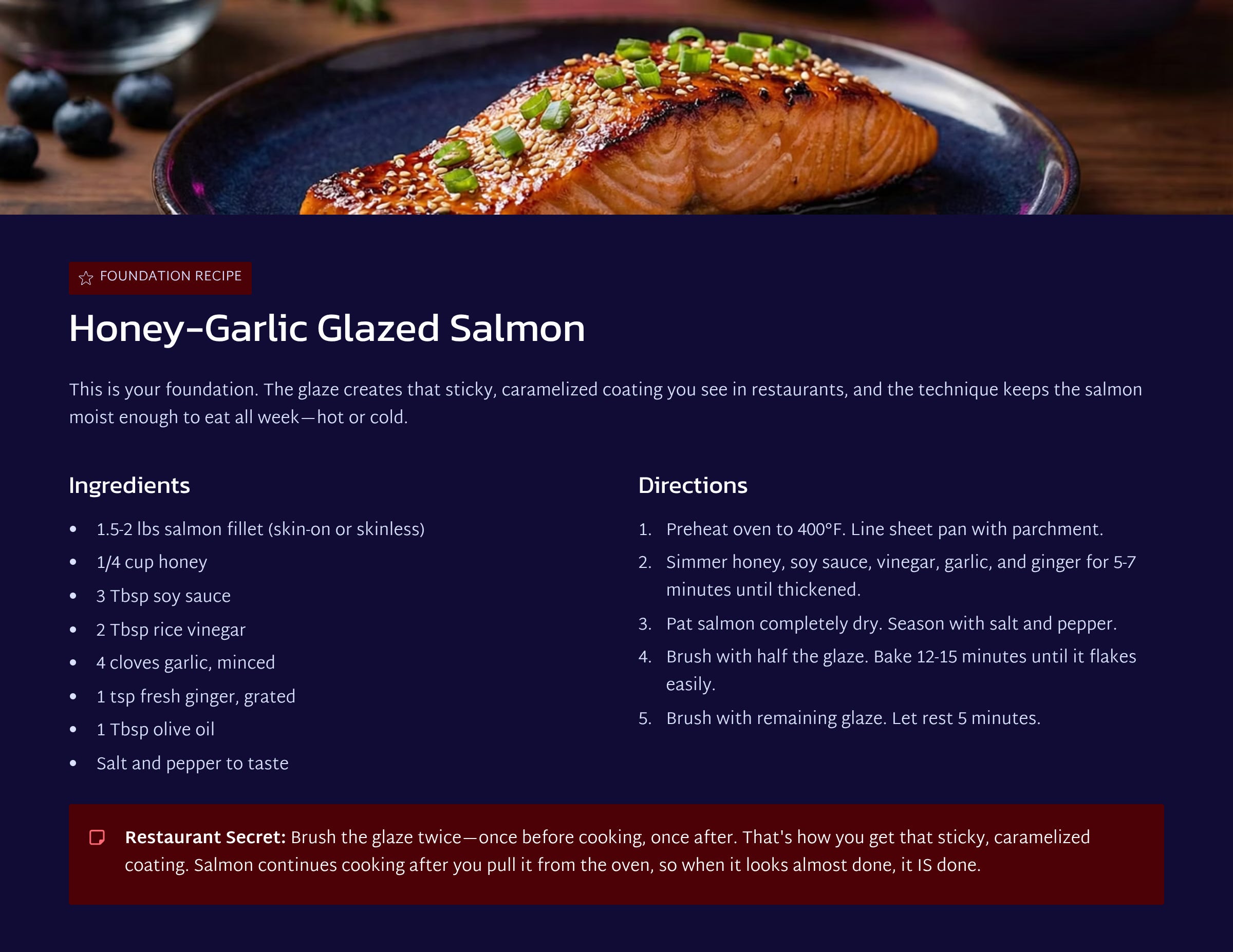
The Restaurant Method: Honey-Garlic Glazed Salmon
This technique creates a sticky, caramelized coating that does two things: locks in moisture AND adds so much flavor that even on Day 4, the salmon tastes intentional—not like leftovers.
Here's the exact method I use at home:
The Glaze:
- 1/4 cup honey
- 3 Tbsp soy sauce
- 2 Tbsp rice vinegar
- 4 cloves garlic, minced
- 1 tsp fresh ginger, grated
Simmer these together in a small pan for 5-7 minutes until slightly thickened. You're concentrating the flavors and creating a syrup that will cling to the fish.
The Salmon:
- 1.5-2 lbs salmon fillet (skin-on or skinless, your call)
- Salt and pepper
- Parchment-lined sheet pan
Here's the method:
1. Pat the salmon completely dry. This is non-negotiable. Moisture on the surface = steaming instead of caramelizing. You want that glaze to stick and sizzle, not slide off.
2. Season with salt and pepper. Place on your sheet pan.
3. Brush with half the glaze. This is glaze round one.
4. Bake at 400°F for 12-15 minutes. You're looking for it to flake easily with a fork but still have a slightly translucent center. Don't wait for it to look "fully cooked"—remember, carryover cooking will finish it.
5. The moment it comes out of the oven, brush with the remaining glaze. This is glaze round two. This is the secret. The hot fish will absorb some of the glaze and the rest will form that sticky, glossy coating.
6. Let it rest for 5 minutes. During this time, carryover cooking finishes the job and the glaze sets.
What you just created: Salmon with a protective, flavorful barrier that keeps it moist for days. The double-glaze is your insurance policy against dry fish.
---
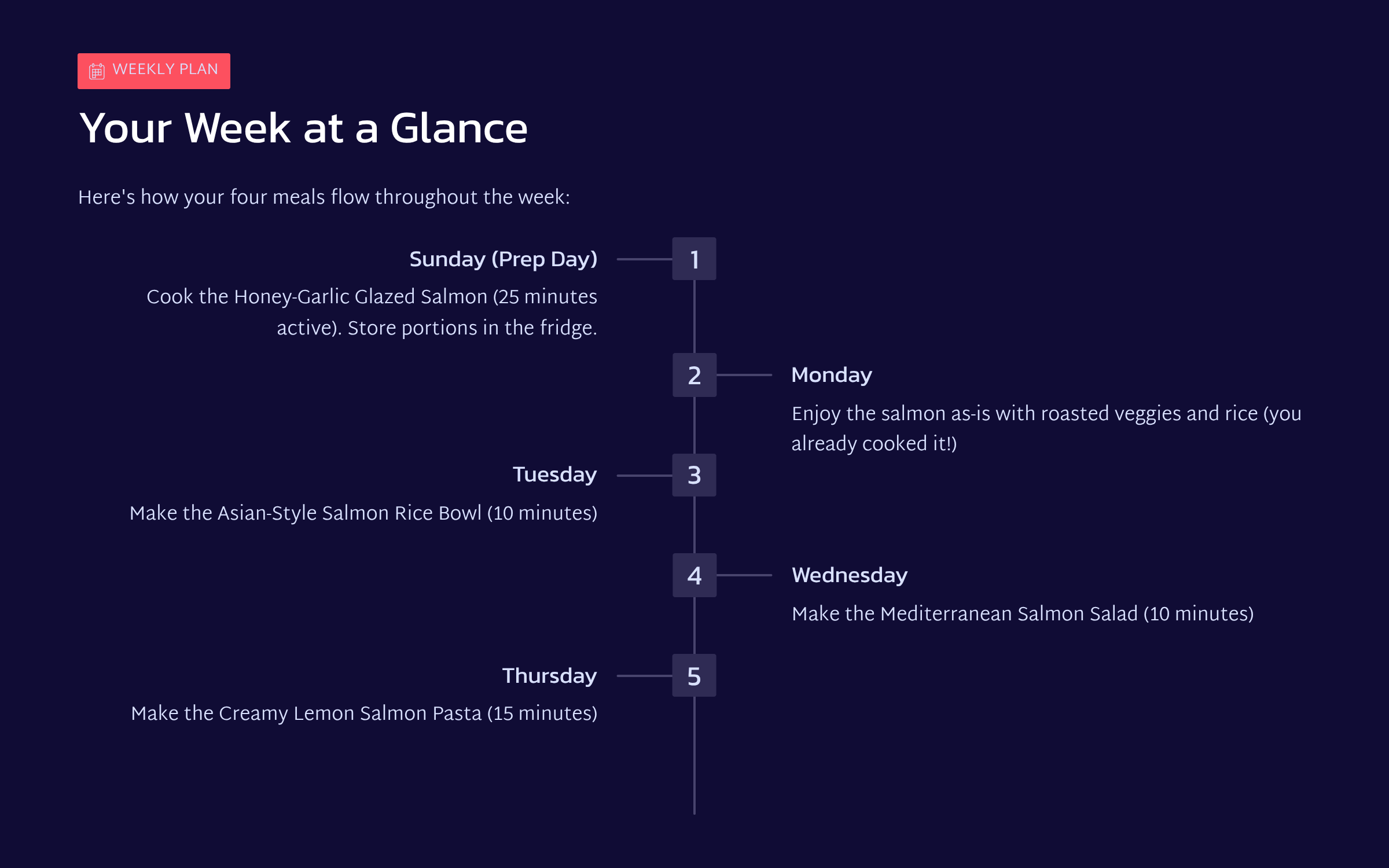
Monday: Eat It Fresh
Tonight, you earned this. Serve the salmon hot with some roasted vegetables and rice. Enjoy that golden, sticky, caramelized perfection.
This is what salmon is supposed to taste like.
Tuesday-Thursday: This Is Where It Gets Interesting
Here's the part that changes everything: that salmon you just made doesn't just survive in the fridge—it actually works better in different applications than plain reheated fish would.
Because you've got that glaze coating protecting it, you can use it in three completely different ways without it tasting like boring leftovers.
---
Tuesday: Asian-Style Salmon Rice Bowl
Flake the salmon over warm rice. Add edamame, cucumber, avocado. Make a quick sauce with soy sauce, sesame oil, and lime juice. Top with sesame seeds and green onions.
Why this works: The honey-garlic base translates perfectly into an Asian flavor profile. You're eating it at room temperature (no reheating = no drying out). The fresh vegetables and sauce make it feel like a completely new meal.
Time: 10 minutes to assemble.
Wednesday: Mediterranean Salmon Salad
Mixed greens, cherry tomatoes, olives, feta, red onion, cucumber. Top with cold salmon straight from the fridge. Dress with lemon-yogurt dressing.
Why this works: This is served completely cold, so there's no reheating risk at all. The Mediterranean flavors (lemon, feta, olives) are so different from the Asian bowl that your brain doesn't register this as "salmon again." It registers it as "Greek salad with protein."
Time: 8 minutes to assemble.
---
Thursday: Creamy Lemon Salmon Pasta
Cook pasta. Make a quick cream sauce with butter, garlic, cream, and lemon. Toss with pasta and frozen peas. Gently fold in flaked salmon at the very end—you're just warming it through, not cooking it again.
Why this works: Pasta changes everything. This is Italian comfort food—rich, creamy, cozy. The lemon cream sauce is so flavorful that even if the salmon isn't quite as moist as Day 1, you don't notice because it's swimming in sauce.
Time: 15 minutes start to finish.
---
Four Meals. Four Completely Different Experiences.
Let's recap what just happened:
Monday: Asian honey-garlic (hot, sweet-savory, fresh from the oven)
Tuesday: Asian rice bowl (room temp, fresh vegetables, different texture)
Wednesday: Mediterranean salad (cold, bright, tangy—feels like summer)
Thursday: Italian pasta (hot, rich, creamy—feels like a hug)
Same salmon. Four different cuisines. Zero boredom. Zero dry, sad fish.
Total active cooking time for the entire week? About 45 minutes.
Total cost? $35-40 for all four dinners.
What you're NOT doing: Ordering delivery three times. Letting expensive salmon go bad. Eating the same boring meal four nights in a row.
---
Why This Actually Works (Even When You're Exhausted)
This isn't about being perfect. It's not about spending three hours on Sunday making ten identical containers.
It's about cooking strategically once so that Wednesday night—when you're exhausted and tempted to give up—you have options that don't feel like leftovers.
The restaurant technique (that double-glaze) solves the moisture problem.
The remix strategy solves the boredom problem.
You end up with four meals that feel completely different, even though you only really cooked once.
That's the real reason restaurants can serve salmon every single night and people never get tired of it. They're not making it fresh to order every time. They're using systems.
And now you can use the same system.
---
Get The Complete Guide
I put everything into a downloadable guide so you don't have to screenshot this email:
✓ The full honey-garlic glazed salmon recipe with exact measurements and chef's notes
✓ All three remix meals with step-by-step instructions
✓ A complete shopping list ($35-40 total)
✓ Storage tips so your salmon doesn't get that fishy smell in the fridge
✓ A week-at-a-glance meal planner
[Download: The Weeknight Salmon That Never Gets Boring]

It's free. It's designed for real life. And it works even when you're too tired to think.
One Last Thing
If salmon has been frustrating you, it's not your fault. The default method most people teach just doesn't work for eating it multiple times in a week.
But once you learn the restaurant technique—the double-glaze, the slight undercook, the strategic remix approach—salmon stops being intimidating and starts being one of the easiest proteins to work with.
Try it this week. See if Wednesday night feels different.
Next Thursday, I'll send you a completely different protein using the same approach. Maybe chicken thighs. Maybe something you'd never think to cook this way.
But the method stays the same: one smart cook, multiple completely different meals, zero waste.
See you next week.
— CulinaryBrief
P.S. If you try the salmon this week, hit reply and tell me which remix surprised you the most. I read every response and I'm genuinely curious which one clicks for people.
Lots of comments regarding the pricing on salmon. Salmon runs about the same as beef ($12-15/lb), but here's what I do: Buy a whole side from Costco ($9-10/lb), portion it out, batch cook on Sunday. One $30 purchase = 4-5 dinners. Way cheaper than the $15 bowls I used to order. Real restaurant math: prep smart, eat well, spend less. Want my Costco salmon breakdown?