
It’s 11:30pm on a Tuesday.
I just finished a double shift. My feet hurt. I’m exhausted. And I’m absolutely starving.
This is the moment most people open DoorDash. I used to do the same thing.
But tonight, I opened my fridge instead: leftover farro, cottage cheese, some roasted cabbage from Sunday. Five minutes later, I had a bowl that kept me full until morning.
No takeout. No midnight snacking. No waking up at 3am hungry.
This didn’t happen by accident. It took months of failing, researching, and rebuilding how I think about food. Here’s what I figured out.
The Problem I Couldn’t Solve
For months, I had this cognitive dissonance that was driving me insane.
I’d spend 10-12 hours in a restaurant kitchen, making incredible food for other people. Then I’d come home and eat like someone who had no idea what they were doing.
Not because I couldn’t cook. But because everything I tried to make at home that was “healthy” left me starving two hours later.
I’d make a salad. Hungry an hour later.
I’d make grilled chicken and vegetables. Starving before the next shift.
I’d try quinoa bowls, smoothie bowls, whatever was trending on Instagram. None of it worked.
Then I’d be digging through the fridge at midnight, eating random snacks, eventually ordering takeout at 1am because I couldn’t take it anymore.
The cycle was exhausting. And honestly, embarrassing.
I’m a professional chef. I should know how to feed myself. But clearly, I didn’t.
The Research Phase
So I started researching.
Not just scrolling food content. Actually researching. High-protein diets. Satiety science. What actually keeps you full.
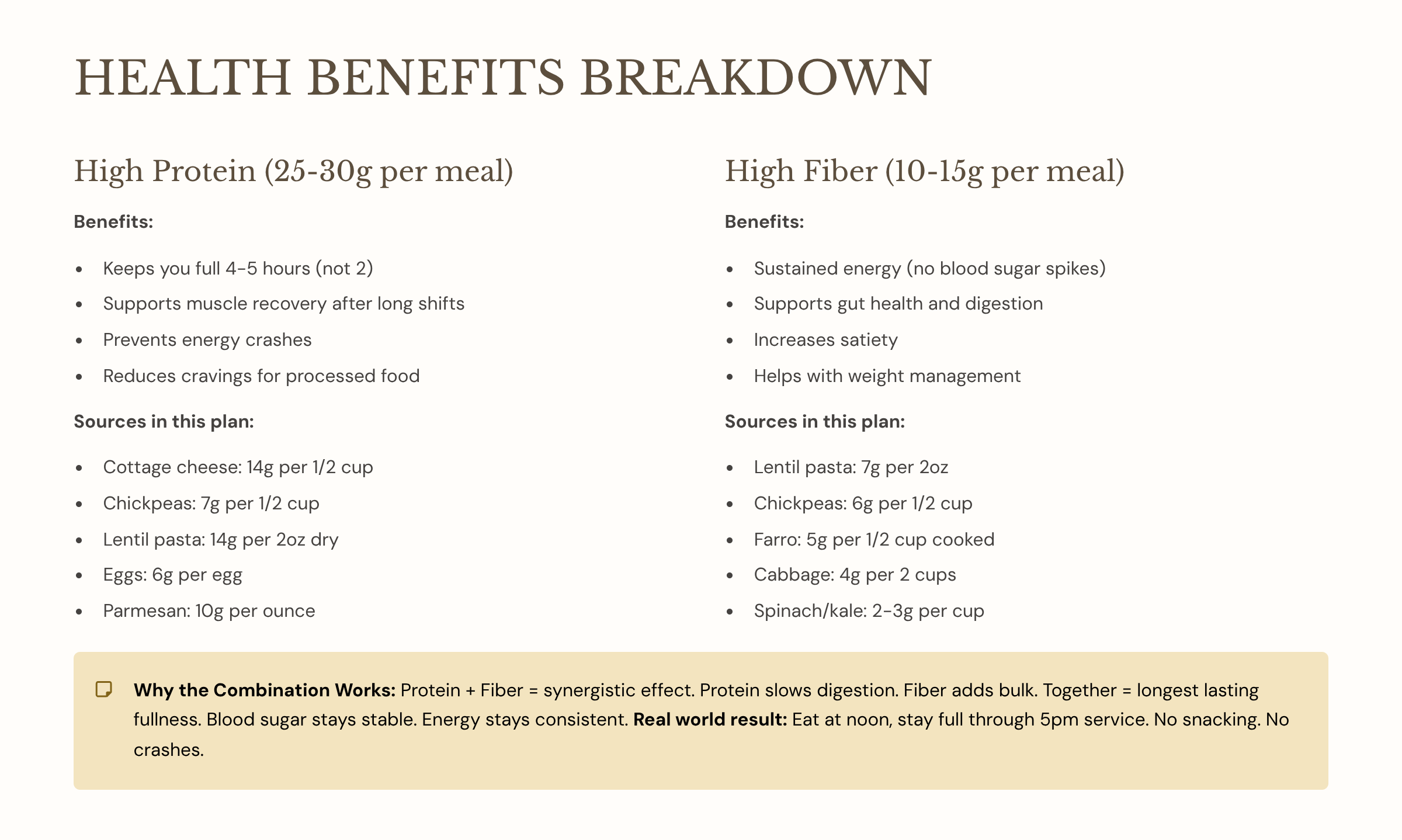
And I kept seeing the same thing over and over: protein + fiber.
Not protein alone. Not fiber alone. The combination.
Protein slows digestion. Fiber adds bulk. Together, they create this synergistic effect that actually keeps you satisfied.
The targets I kept seeing: 25-30g protein and 10-15g fiber per meal.
I looked at what I was eating. My “healthy” meals were maybe 12g of protein, 4g of fiber. No wonder I was starving.
But here’s what I couldn’t figure out: how do you hit those numbers consistently when you’re exhausted, working 60+ hours, and have a $60 weekly grocery budget?
The Cottage Cheese Moment
Then I saw cottage cheese blowing up on TikTok.
I’m not gonna lie—I was skeptical. Cottage cheese has always been that weird diet food people eat with pineapple, right?
But everyone was blending it into pasta sauce. Using it in bowls. Making it the base for high-protein everything.
So one night, exhausted after a shift, I tried it.
I had pasta. I had cottage cheese. I had some vegetables that needed using.
I remembered the emulsification technique. Pasta water, aggressive tossing, building a sauce that clings.
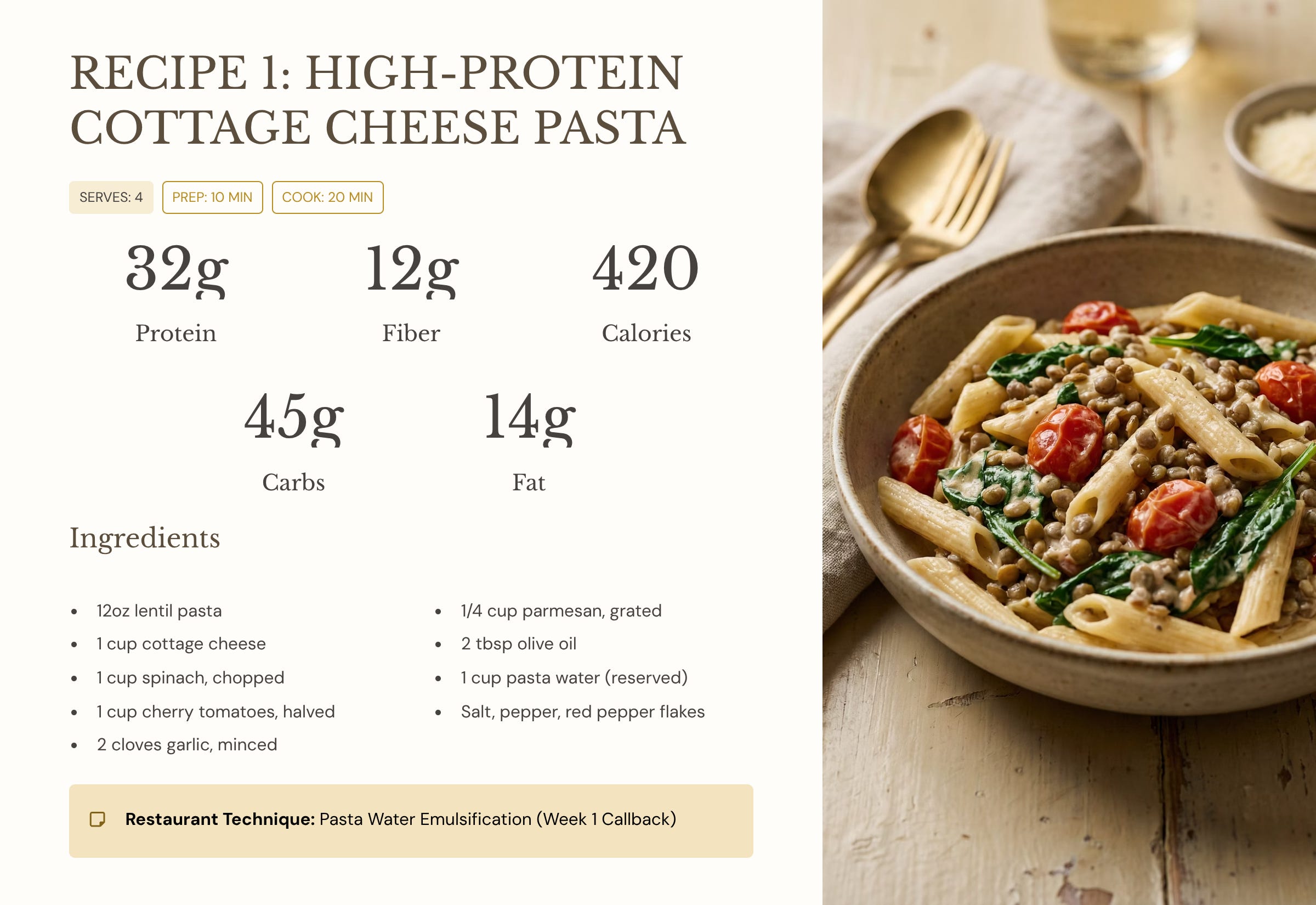
I blended the cottage cheese with some pasta water until it was smooth. Sautéed garlic and tomatoes. Wilted some spinach. Tossed the pasta with the cottage cheese mixture and pasta water. Added parmesan.
The result? Creamy, rich, restaurant-quality pasta.
Then I looked at the macros: 32g protein. 12g fiber. Under $4.
I ate it at 11pm. Went to bed full. Woke up the next morning still not hungry.
Made it through my next shift without that constant background hunger I’d gotten used to.
That’s when it clicked: this is what I’d been missing.
Not a recipe. A formula. High protein + high fiber. Proper technique. Affordable ingredients.
Building The System
But I couldn’t just have one meal that worked. I needed a system.
I needed something that:
Worked with my $60/week budget
Fit in my 8x6 foot apartment kitchen
Didn’t require me to think after a 12-hour shift
Adapted to whatever was on sale
Actually tasted good
Most meal prep advice didn’t work for me. Making 7 identical meals on Sunday? That gets old by Wednesday. Spending 4 hours batch cooking? I don’t have that time.
So I took what I learned from restaurants and adapted it for home.
In restaurants, we prep ingredients, not full meals. We have mise en place—everything in its place. Then during service, we combine those ingredients in infinite ways.
That’s what I needed at home. Not meal prep. Technique prep.
Spend 2 hours on Sunday prepping ingredients. Then all week, assemble what I want in 10 minutes.
How I Shop Now
I used to walk into the grocery store with a rigid list and get frustrated when they were out of something or when nothing was on sale.
Now I shop with a framework instead of a list.
My framework: hit protein + fiber targets with whatever’s affordable.
Here’s what that actually looks like:
Protein sources I look for:
Cottage cheese (14g protein per 1/2 cup, $3.50/tub)
Chickpeas ($1.50/can, lasts multiple meals)
Eggs (always in the cart)
Whatever cheese is on sale
Fiber sources:
Farro, barley, or lentil pasta (whatever’s cheapest)
Cabbage (always under $3 for a huge head)
Whatever vegetables look good
Canned beans
The strategy: If cottage cheese is the plan but Greek yogurt is on sale—I buy Greek yogurt. If farro is $4 but barley is $2.50—I buy barley. If chicken thighs are $1.99/lb—I buy extra and freeze them.
The formula stays the same: protein + fiber. The specific ingredients are flexible.
This is how I make $60 work. I’m not rigid. I’m strategic.
The Freezer Is Part of the Strategy
Here’s something nobody talks about: your freezer is part of your meal prep system.
When I batch-cook grains on Sunday, I freeze half. Now I have grains ready for two weeks.
Roasted chickpeas freeze perfectly. Pop them in the oven for 5 minutes, they’re crispy again.
When proteins go on sale, I buy extra and freeze portions. Last week chicken thighs were $1.99/lb. I bought 5 pounds. Now I have protein for the next month.
This is how you make a $60 weekly budget actually work. You’re not just shopping for this week. You’re building a system that compounds.
The Sunday Setup
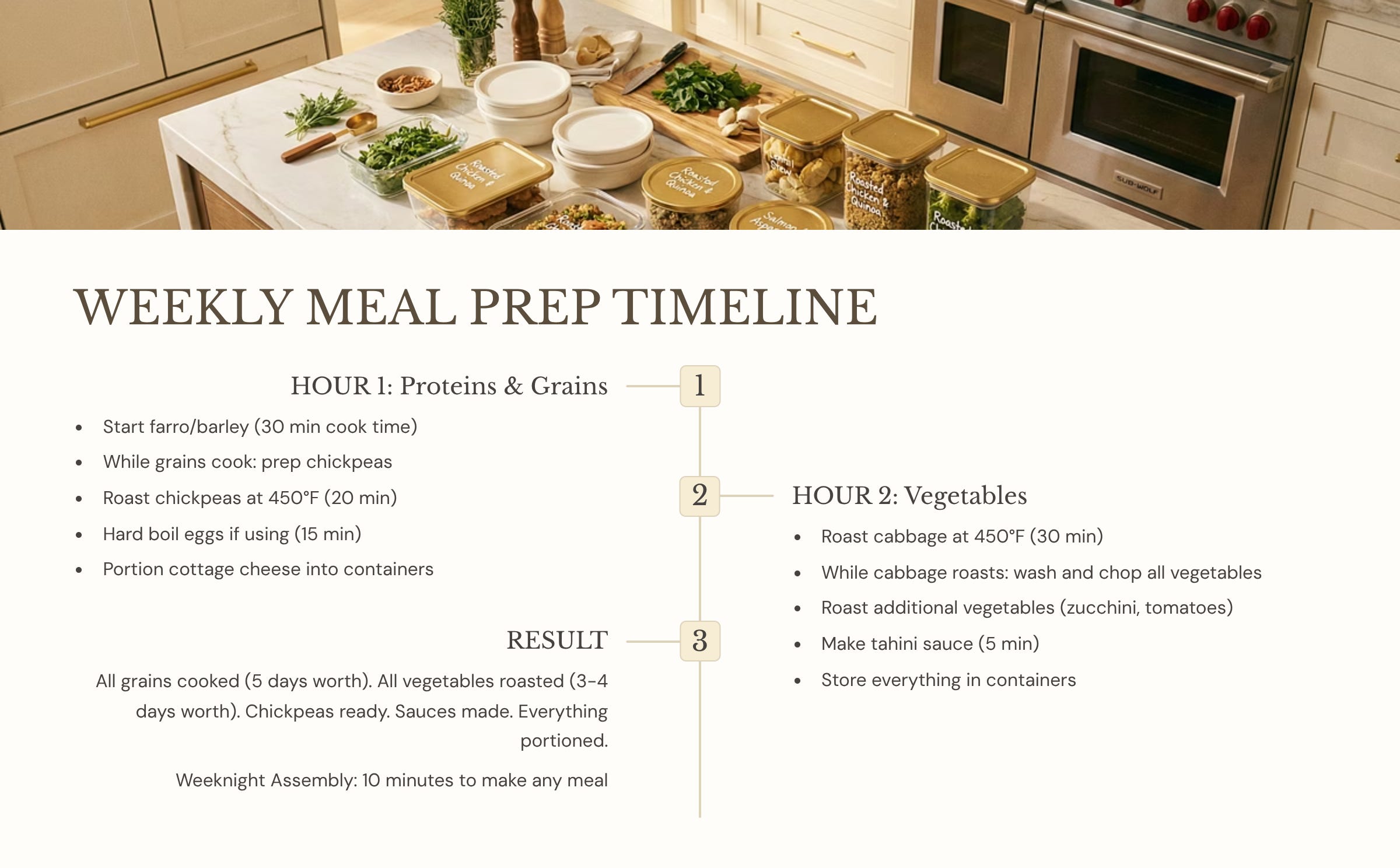
So here’s what my Sunday looks like now:
Hour 1: Grains and Proteins
Put farro or barley on to cook (30 minutes, mostly hands-off)
While that’s cooking, prep chickpeas
Roast chickpeas at 450°F for 20 minutes
Portion cottage cheese into containers
Maybe hard-boil eggs if I’m feeling ambitious
Hour 2: Vegetables
Roast a whole head of cabbage at 450°F (30 minutes)
While that’s roasting, wash and chop everything else
Roast zucchini and tomatoes
Make tahini sauce (takes 5 minutes)
Store everything in containers
That’s it. Two hours. Everything’s ready for the week.
This isn’t meal prep where I’m making 7 identical containers. I’m prepping ingredients that I can combine any way I want.
What I Actually Eat
Let me show you what this looks like in practice.
Monday: I come home at 10pm. Grab the cottage cheese pasta recipe from the PDF. Cook lentil pasta (8 minutes). Reheat the cottage cheese sauce I made Sunday. Toss with pasta water. Done in 15 minutes. 32g protein, 12g fiber.
Tuesday: The 11:30pm shift I mentioned earlier. Too tired to cook pasta. Build a bowl: warm farro, cottage cheese, roasted cabbage, roasted chickpeas, tahini drizzle, squeeze of lemon. 5 minutes. 26g protein, 11g fiber.
Wednesday: Come home hungry. Take the leftover roasted cabbage and chickpeas, warm them up, put them over farro, add a fried egg on top. 7 minutes. Different meal, same ingredients.
Thursday: Make the cottage cheese pasta again, but with zucchini instead of spinach. Still 32g protein, still delicious, slightly different.
Friday: Sometimes I just eat the roasted chickpeas straight from the container with tahini sauce. It’s 18g protein, 15g fiber, and I’m not apologizing for it.
Same ingredients. Different meals every day. Never boring.
And here’s the key: I’m not hungry between meals anymore. No constant snacking. No midnight DoorDash. No waking up starving at 3am.
I eat one meal after my shift, and I stay full until the next day.
That’s what the protein + fiber combination does.
The Cottage Cheese Pasta Template
That first cottage cheese pasta I made? It became my template for everything.
The formula is:
Cook protein-rich grain (lentil pasta, farro, barley)
Blend cottage cheese with liquid (pasta water, broth, whatever)
Add vegetables (whatever you have)
Use Week 1 emulsification technique
Season, toss, done
But you can adapt it infinitely:
The ingredients change:
Cottage cheese → Greek yogurt
Lentil pasta → regular pasta → farro → quinoa
Spinach → kale → zucchini → whatever
The technique stays the same:
Blend your protein source
Use liquid to create sauce
Toss aggressively for emulsification
Don’t skip the pasta water
This is what I mean by learning techniques instead of just following recipes.
Once you understand the principle, you can adapt based on what’s on sale, what’s in your fridge, what you’re craving.
The PDF: Everything in One Place
I put everything I’ve learned into a downloadable guide.
Here’s what’s in it:
The 3 Recipes:
High-Protein Cottage Cheese Pasta (32g protein, 12g fiber)
Sheet Pan Roasted Cabbage + Chickpeas (18g protein, 15g fiber)
High-Fiber Grain Bowl (26g protein, 11g fiber)
Each recipe includes:
Full macro breakdown
Step-by-step instructions
Restaurant technique callouts (connecting to Week 1)
Chef’s tips
Substitution options
Meal prep notes
Plus:
Complete grocery list with checkboxes ($60 budget)
Sunday mise en place timeline
Storage guide for everything
The Bowl Formula (use with any ingredients)
Troubleshooting common issues
Cost breakdown per meal
How to use it:
Pull it up on your phone at the grocery store. Use the checklist. Adapt based on what’s on sale.
Then use it in the kitchen. The recipes are formatted for reference—ingredients at the top, instructions below, tips at the bottom.
This isn’t just recipes. It’s a system.
[DOWNLOAD THE WEEK 2 PDF HERE]

Start With the Cottage Cheese Pasta
If you’re going to try one thing from this week, start with the cottage cheese pasta.
Here’s why:
It’s the easiest. If you can boil pasta and blend cottage cheese, you can make this.
It uses Week 1 techniques. If you followed last week, you already know pasta water emulsification. This just adds a protein boost.
The macros are undeniable. 32g protein, 12g fiber. You will stay full. This isn’t a promise, it’s physics.
It costs $3.75 per serving. Less than any takeout option.
It tastes like restaurant pasta. Not like diet food. Like actual, creamy, delicious pasta.
Make it once. See how long it keeps you full. Then come back for the other recipes.
The Adaptation Mindset
The PDF has specific recipes with specific ingredients.
But the real value is understanding the SYSTEM so you can adapt it to your life.
When chicken thighs go on sale: Buy them, freeze them, use them instead of chickpeas in the grain bowl.
When Greek yogurt is cheaper than cottage cheese: Use it. Blend it the same way. Same result.
When Brussels sprouts are $2/lb instead of cabbage: Roast them at 450°F with the same technique.
When you’re out of farro: Use rice, quinoa, bulgur, whatever grain you have.
The formula is: protein + fiber + proper technique.
The specific ingredients are flexible.
This is how you make a system that’s actually sustainable. You’re not dependent on having the exact ingredients. You understand the principles.
What This Actually Changed
Let me be specific about what’s different now versus three months ago:
Before:
Hungry 2 hours after “healthy” meals
Constant snacking
Midnight takeout orders
Waking up at 3am starving
Felt like I was failing at something I should be good at
Now:
One meal keeps me full 5+ hours
No snacking between meals
Haven’t ordered midnight takeout in weeks
Sleep through the night
Actually confident about feeding myself
The difference isn’t willpower. It’s not discipline. It’s not trying harder.
The difference is: I’m hitting 25-30g protein and 10-15g fiber per meal. That’s it.
Everything else—the grocery strategy, the Sunday prep, the freezer system, the adaptation mindset—exists to make that formula sustainable with my constraints.
Some Real Talk
Not every night is perfect.
Sometimes I still eat cereal for dinner. Sometimes I still order takeout. Sometimes I don’t do Sunday prep because I’m too tired.
This isn’t about perfection.
This is about having a system that works most of the time. A system that makes eating well easier than not eating well.
The cottage cheese pasta takes 15 minutes. DoorDash takes 45 minutes and costs $25.
The grain bowl takes 5 minutes to assemble. Driving to get takeout takes 20 minutes.
When the system makes it EASIER to eat well, you do it more often.
That’s the whole point.
What’s Next
Week 1 taught you the techniques: emulsification, high-heat roasting, bowl building.
Week 2 taught you how to use those techniques systematically with a protein + fiber focus.
Week 3 will teach you how to adapt this system seasonally—how to shop what’s on sale, how to use the same formula with completely different ingredients, how to build a pantry that actually gets used.
The formula stays the same. The ingredients adapt to your life, your budget, your location, what’s in season.
But for now:
Download the PDF. It has everything you need for this week.
Try the cottage cheese pasta. Start with the recipe that changed everything for me.
See if the protein + fiber thing works for you. Track how long you stay full. Notice if you’re snacking less. Pay attention.
Then come back next Thursday for Week 3.
The Resources
This Week’s PDF: [Link - includes all 3 recipes, grocery list, prep timeline, and the complete system]
Week 1 Techniques:
Let’s Stop Pretending Steamed Broccoli Is Going to Cut It

I need to be honest with you right from the start.
Questions? Reply to this email. I respond to everyone.
Made something? Tag me @culinarybrief on Instagram or TikTok. I want to see your version.
Let’s stop pretending steamed broccoli is going to cut it.
Let’s stop being hungry 2 hours after eating “healthy” meals.
Let’s build a system that actually works.
— Tyler
P.S. The most common question I got about Week 1 was “Do I really need miso paste?” The answer was no—the technique is what matters, not the exact ingredients.
Same applies here. You don’t need cottage cheese specifically. You need a high-protein base that blends smooth. Cottage cheese is just the most affordable option at $3.50/tub. Greek yogurt works. Silken tofu works. Mashed white beans work.
Stop letting perfect be the enemy of good. Use what you have. Adapt. Make it yours.
What are some of the ways you think about what to make for dinner every night? Are you looking for certain nutritional goals to achieve? Are You Grocery Shopping specifically to save money? Are you looking for new and creative dinner ideas to share with your family? Im curious to know how you view your weekly grocery shopping and cooking dinner?