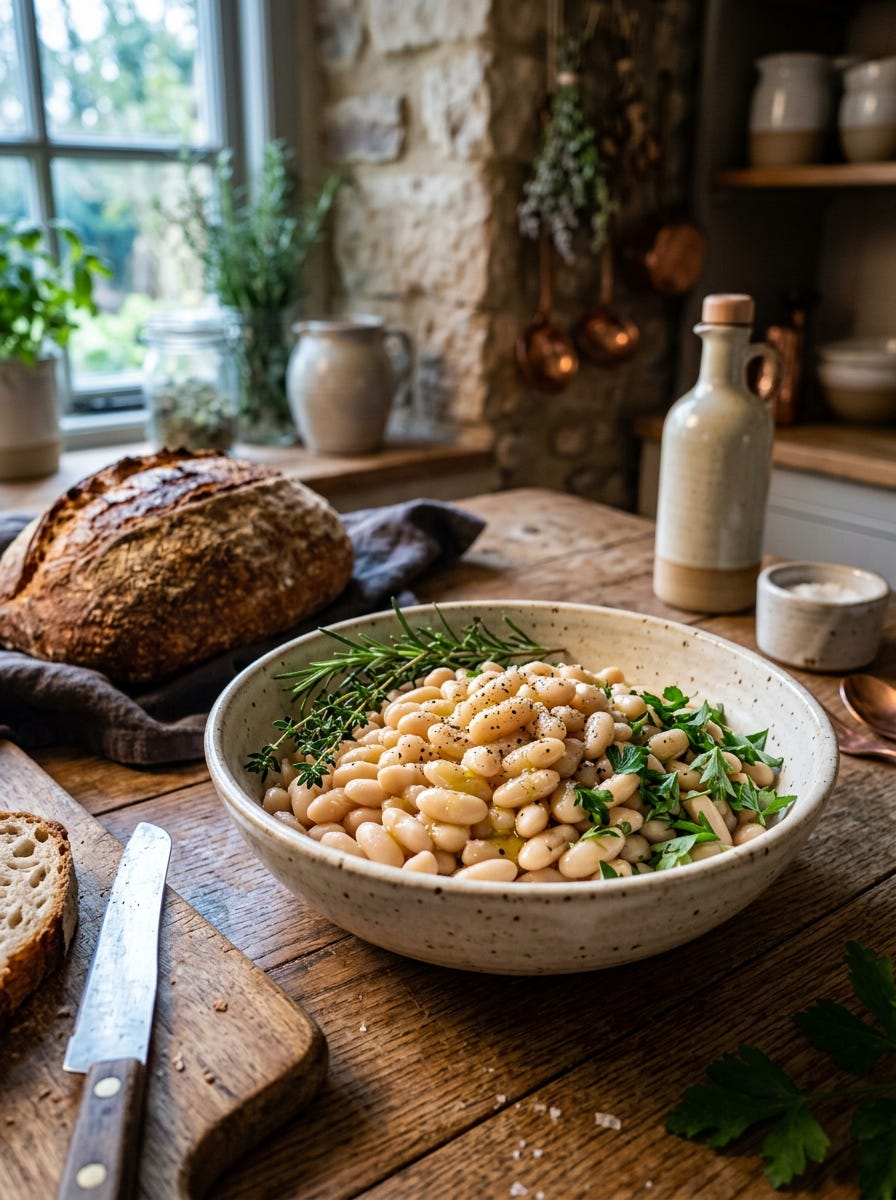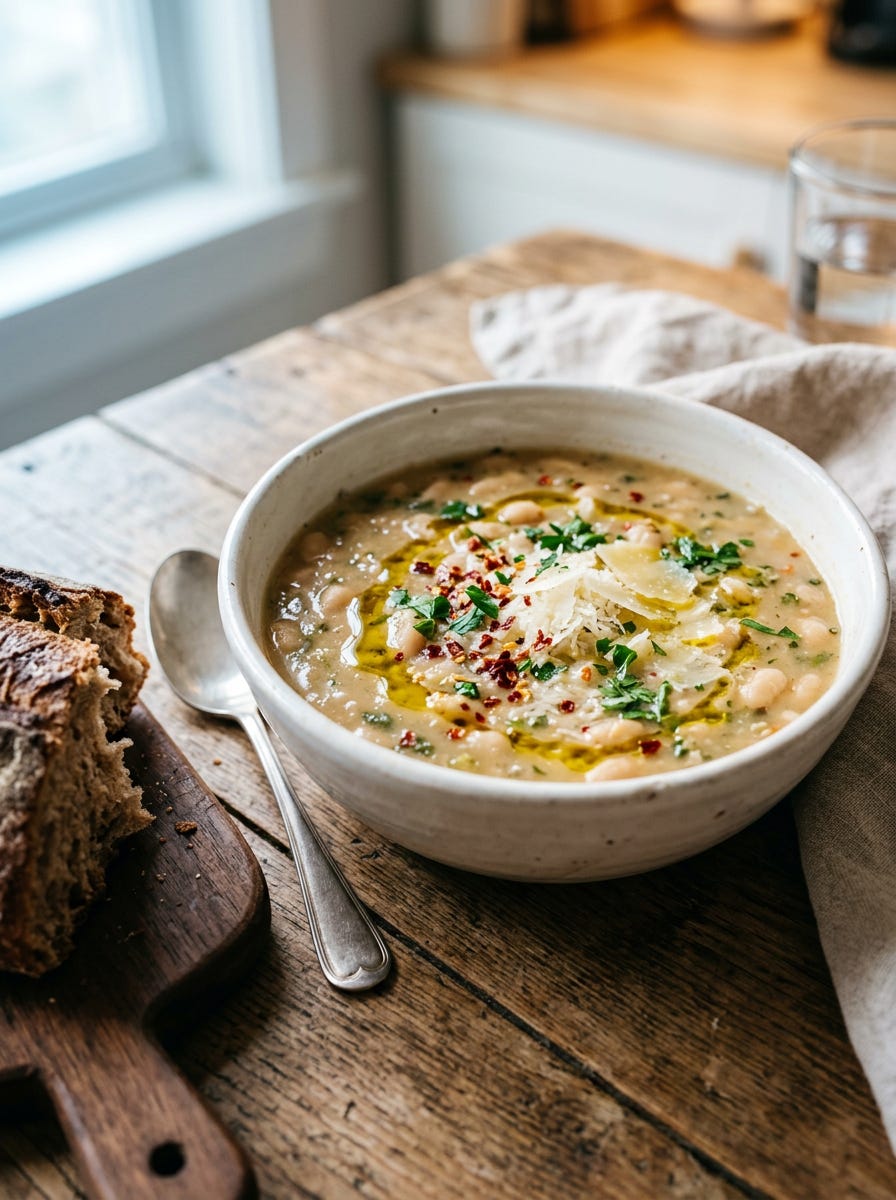
Every restaurant I've worked in keeps a container of bean cooking liquid in the walk-in. It goes into soups, braises, risottos, pan sauces. It has body. It has flavor. It costs nothing.
Most home cooks dump it down the drain.
That liquid is the reason your beans taste flat and restaurant beans don't. You're throwing away free broth every time you open a can and rinse, or boil dried beans and pour them into a colander. The beans themselves are only half the product. The liquid they cooked in is the other half.
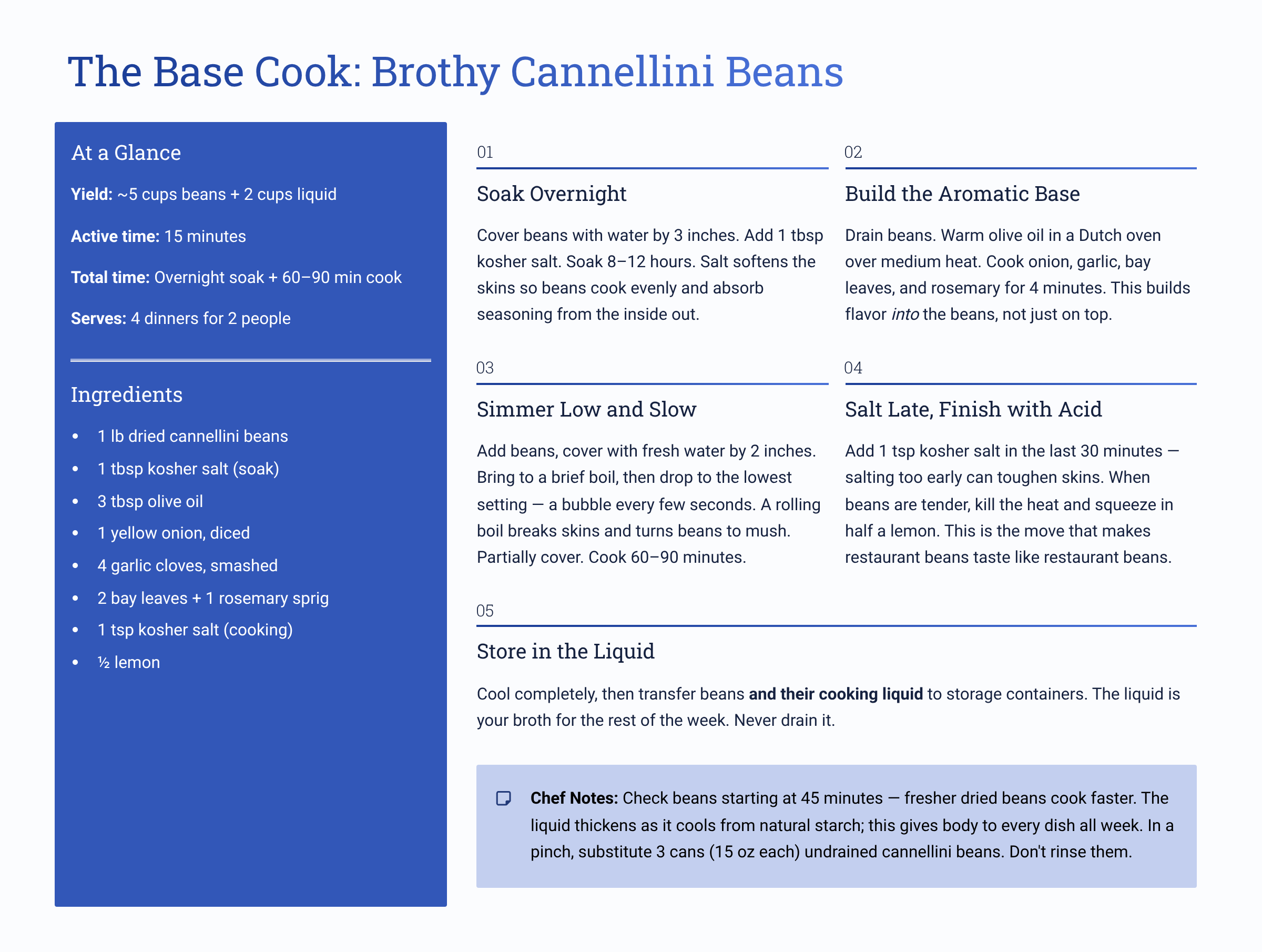
Cannellini beans are where I start when I teach this. They're creamy, mild, and they absorb whatever you build around them. One pound of dried cannellini — about $1.70 — turns into roughly five cups of cooked beans plus two cups of rich, starchy cooking liquid. That's four to five dinners for two people, plus broth you didn't have to buy.
Here's how I do it.
THE BASE COOK
Soak one pound of dried cannellini beans overnight in water with a tablespoon of kosher salt. The salt softens the skins during the soak, which lets the beans cook evenly and absorb seasoning from the inside out. This isn't optional — it's the difference between beans that taste seasoned and beans that taste salted on the surface.
Drain the soaking water. In a heavy pot or Dutch oven, warm three tablespoons of olive oil over medium heat. Add a diced onion, four smashed garlic cloves, two bay leaves, and a sprig of rosemary. Cook the aromatics for about four minutes until the onion is soft and the garlic is fragrant. This step is what most recipes skip and it's the single biggest reason home-cooked beans taste one-dimensional. Blooming aromatics in fat before the liquid goes in builds flavor INTO the bean, not on top of it.
Add the drained beans. Cover with fresh water by about two inches. Bring to a brief boil, then immediately drop the heat to the lowest setting your stove has. You want a bare simmer — a bubble every few seconds, not a rolling boil. A hard boil breaks the skins and turns beans to mush. Low and slow keeps them creamy inside with skins that hold together.
Simmer partially covered for about 60 to 90 minutes. The time depends on how old your beans are — fresher dried beans cook faster. Start checking at 45 minutes. Add a teaspoon of kosher salt in the last 30 minutes of cooking. Salting too early can toughen the skins before the interior softens. Salting at the end means flavor without texture problems.
When the beans are tender and creamy, kill the heat. Squeeze in half a lemon. This is the move that separates good beans from restaurant beans — acid at the finish brightens everything and wakes up the flavor. Stir it in. Let the pot cool.
Store the beans IN their liquid. This is the whole point. That liquid is your broth for the rest of the week.
YOUR WEEK
Monday — Brothy White Bean Bowl. Warm a generous scoop of beans in their liquid. Ladle into a bowl. Drizzle with good olive oil, a pinch of chili flakes, shaved Parmesan, and crusty bread for dipping. Ten minutes. This is the meal that's all over TikTok right now, except yours actually has flavor because you built it from scratch.
Wednesday — White Bean and Greens Skillet. Sauté a few handfuls of spinach or kale with garlic in olive oil. Add a cup of beans with some of their liquid. Let it simmer for five minutes until the greens wilt into the broth. Finish with lemon. One pan, twelve minutes.
Thursday — Smashed White Bean Toast. Scoop out beans, mash roughly with a fork, stir in olive oil and a pinch of salt. Spread on toasted sourdough. Top with cherry tomatoes, fresh basil, flaky salt. This is a ten-dollar restaurant appetizer for about a dollar.
Friday — White Bean Soup. Add remaining beans and all the liquid to a pot with a cup of chicken or vegetable stock, diced carrots, celery, and a Parmesan rind if you have one. Simmer twenty minutes. The bean liquid does the heavy lifting — it's already rich and starchy, so the soup comes together with almost no effort.
THE COST
One pound dried cannellini beans: $1.70
Aromatics, olive oil, lemon: $3
Bread, greens, Parmesan, tomatoes, stock across the week: $7-8
Total: $12 for four dinners for two.
That's $1.50 per serving.
Per cup of beans: approximately 15g protein, 11g fiber. Pair with rice or bread for a complete protein.
The same white bean bowl from a restaurant runs $14-16 before tip. You just made four of them for less than the price of one.
What's the one bean you always have in your pantry? Reply and tell me — I'll show you how to get more flavor out of it next week.
P.S. Have you ever saved the bean cooking liquid before? If you try it this week, let me know what you think. I'm betting you never drain a bean again.
[Disclosure: Some links below are affiliate links. I only recommend tools I actually use.]
1. Parmedu 5.5QT — Dutch oven. If you're simmering beans low and slow, you need a heavy pot that holds heat evenly. This is the one I use at home. It goes from stovetop to oven and cleans up easily.
2. Camellia Brand Dried Great Northern Beans — Dried cannellini beans. Not all dried beans are equal. Fresher beans cook faster and taste better. This brand has consistent quality and I've never had a bad batch.
3. Atlas 1 LT Cold Press Extra Virgin Olive Oil — Finishing olive oil. The olive oil you drizzle on top of the brothy bowl isn't the same one you cook with. A good finishing oil makes that final step worth it. This is what I keep on the counter.