
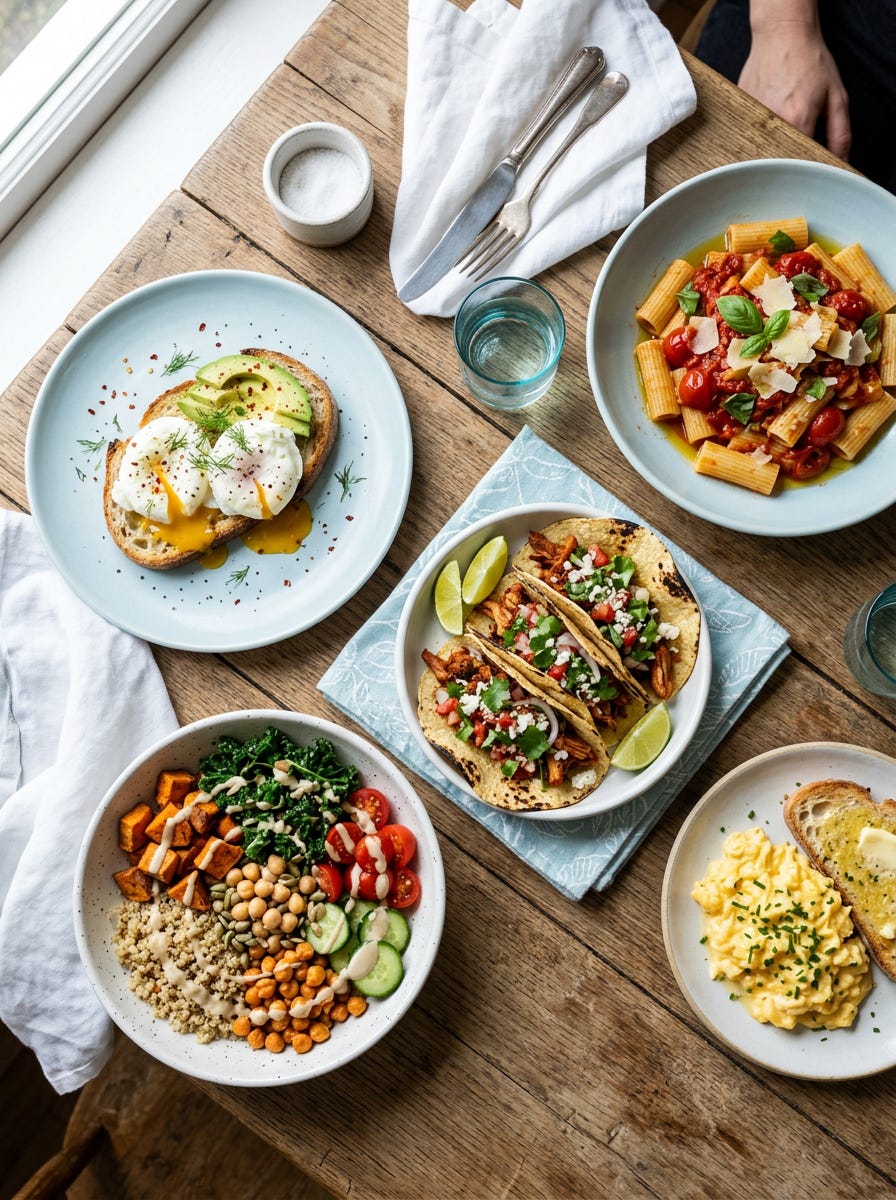
In a professional kitchen, we don’t look at a dozen eggs and think “breakfast.”
We think infrastructure.
I’ve watched $4 worth of protein turn into a $14 grain bowl at lunch, a taco filling at the dinner station, and a $16 pasta component for the late-night crowd. Same ingredient. Three different plates. Massive margins.
Most home cooks buy eggs for Sunday brunch and stop there. That’s a cultural habit, not a culinary decision. In the Mediterranean, a frittata is a dinner staple. In Japan, tamago is a foundational protein. In the “Staff Meals” of every high-end kitchen I’ve ever worked in, eggs appear at almost every service.
Why? Because they are the highest-value protein on the shelf. They’re the most complete, the fastest to cook, and the cheapest per gram.
The gap between what a restaurant serves and what comes out of your kitchen isn’t about how much you spent at the grocery store. It’s about the absence of a system.
The Mistake Most Home Cooks Make
We’ve all done it: you buy “better” ingredients hoping the result improves. You grab the expensive pre-marinated chicken or the “artisanal” pasta brand.
But ingredient cost has almost nothing to do with that “restaurant quality” feeling. That gap is closed by technique and format.
A can of white beans costs $1.29. Combined with two slices of a well-made frittata and a handful of kale, it’s a complete meal. On a menu, that’s a “Warm White Bean and Egg Salad” sold for $17. Nothing is different except the plate it arrives on and the hands that built it.
This Week’s Infrastructure: The Cast Iron Frittata
We aren’t “cooking dinner” tonight. We are building an anchor protein that will run your entire week.
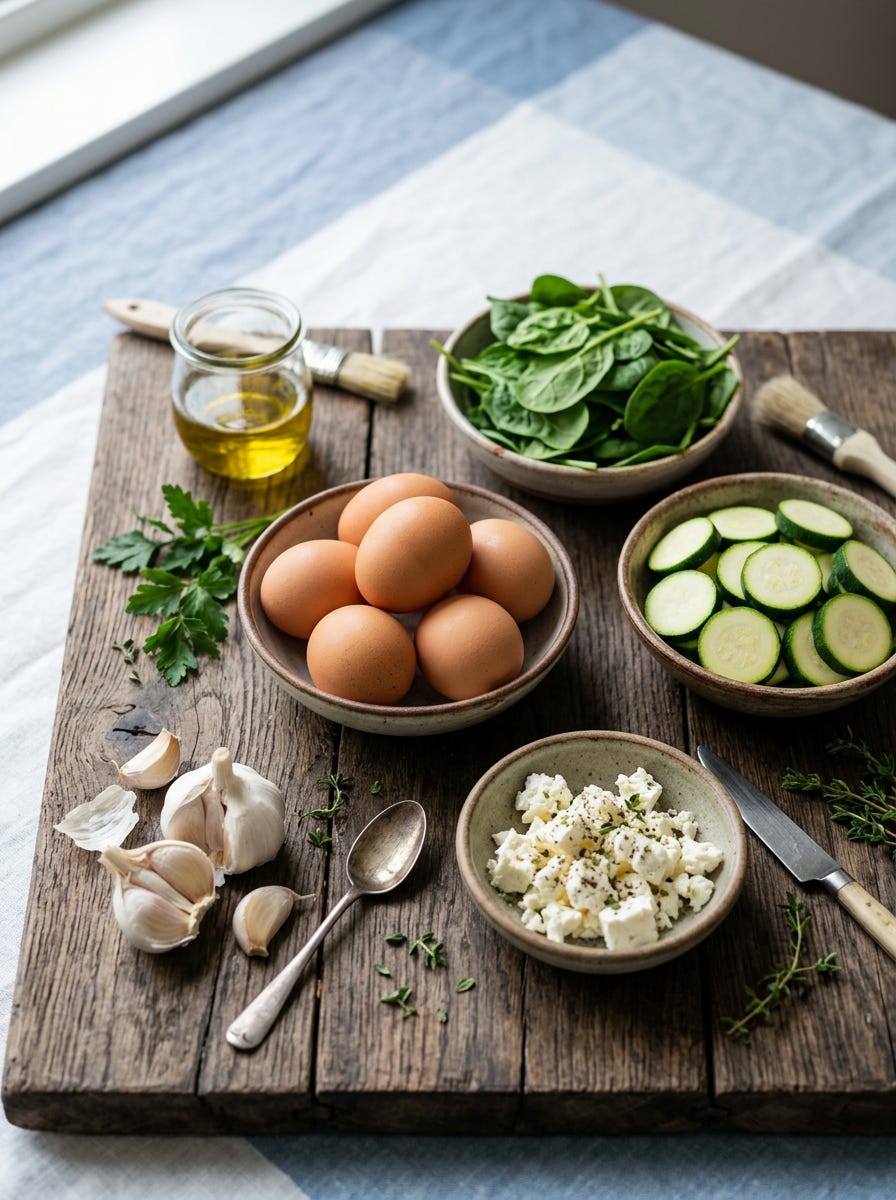
One cast iron frittata—12 eggs, caramelized onions, garlic, and whatever vegetable is cheap this week—takes 20 minutes to bake and survives four days in the fridge without losing its structure.
Chef’s Note: The “Jiggle” Factor The secret to a non-rubbery frittata is carryover cooking. Pull your cast iron when the center still has a visible jiggle. The pan holds enough residual heat to finish the job on the counter. If it looks “done” in the oven, it’s overcooked by the time you eat it.
The Rebuild (Not the Reheat)
The reason you get bored of leftovers is that you try to eat the same dish twice. Instead, we change the format. Your brain registers a change in texture and shape as a completely new meal.
Monday (The Mediterranean): Sliced frittata over smashed white beans and kale with lemon and garlic oil. (Cost: <$3.00)
Wednesday (The Street Food): Crumbled frittata mixed with spiced black beans inside toasted corn tortillas. The format shift makes it feel like a fresh dinner.
Thursday (The Bistro): Frittata cut into thin strips and tossed over Aglio e Olio spaghetti. The eggs function as the protein component for a dish that costs pennies to make.
The “Lunch” Bowl: Warm farro, quick-pickled red onions, and a tahini drizzle. Do not skip the acid. That hit of vinegar is what separates an average bowl from one that feels professional.
The Bottom Line
Total spend for the week: Between $28 and $38. Active cook time: 20 minutes for the anchor; under 15 minutes for each “rebuild.”
When you stop buying “meals” and start buying “materials,” your $4 starts doing a lot more work.
See you in the kitchen,
Tyler
Comment down below and I’ll send you the recipe guide and grocery list for this week.