
Okay, lets talk.
How many times this week have you stood in front of your fridge at 6pm, completely exhausted, staring at ingredients you’re too tired to figure out?
Or skipped buying something at the grocery store because the price made you actually flinch?
Or felt guilty ordering takeout, not because it’s unhealthy, but because you knew you should be cooking?
Yeah. Me too. And apparently, so is everyone else.
HelloFresh just released a massive study asking 5,000 Americans how we’re really eating right now. And honestly? The data just confirmed what we already knew in our bones:
93% of us plan to cook as much or more this year. We’re committed. We want to do this.
But also? 64% of us have wanted to “quit dinner” at some point.
And 68% of us didn’t buy something we usually get because the price was too high.
So we’re cooking more, spending more, and somehow still exhausted. What’s going on?
Here’s what I think is happening—and the data backs this up.
We’re not failing. We’re just operating without a system.
Let me show you what I mean.
The report found that 86% of us eat the same meals over and over. And when they asked why, most people said it’s because everyone likes it, or because we’re too tired to cook something new.
But here’s the thing: We’re not bored with the food. We’re bored with the process.
Think about it. You probably have 7-10 meals you rotate through. Tacos. Pasta. That one chicken thing. Maybe a stir-fry. And they’re fine! They work! But every single time you make them, you’re starting from scratch. Shopping for ingredients. Prepping everything. Making decisions.
That’s exhausting.
Restaurants figured this out decades ago. We don’t start from zero every night. We prep once, we use it all week, and we have systems that make the same ingredients feel different every time.
You know what else the study found? 81% of Americans are using shortcuts like meal kits to get dinner done. Nearly 40% use them weekly.
We’re not lazy. We’re looking for help. We want the home-cooked meal, we just need the process to be easier.
And the biggest problem? 38% of us don’t have groceries on hand when we need them.
It’s not our skills. It’s our systems.
So let me tell you about the system that fixes multiple problems at once.
This weekend, a lot of you are cooking holiday meals. Christmas, Hanukkah, Kwanzaa, or just hosting family and trying to survive.
Which means right now, you’re about to have turkey bones. Ham bones. Vegetable scraps from all that cooking. Herb stems. Onion peels. Pan drippings.
Most people throw all of that away.
I want you to save it.
Not because I’m trying to add more work to your life—I promise this is the opposite. But because that “trash” is about to become the thing that makes dinner easier for the next month.
In professional kitchens, we save everything. Every scrap goes into a freezer bag. And when the bag is full, we make stock. Then that stock becomes the base for dozens of different meals.
You already paid for this food. Let’s get everything out of it.
Here’s how this actually works in real life:
Before your holiday meal (literally 5 minutes):
Grab a gallon freezer bag. Label it “stock scraps.” While you’re prepping, just toss in the stuff you’d normally throw away:
Onion ends and skins (yes, even the papery parts)
Carrot peels and ends
Celery leaves and the tough ends you don’t want in the dish
Herb stems from parsley, thyme, rosemary
Garlic skins
That piece of ginger you didn’t use
You’re already cutting these things. This takes zero extra time—you’re just aiming for the bag instead of the trash.
After the meal (3 minutes):
When you’re packing up leftovers and you’re already exhausted, just do this:
Strip the meat off the bones (you were going to do this anyway). Put the bones in another freezer bag. Save any pan drippings.
Too tired to deal with it right now? Just throw it all in the freezer. Make stock next week. Or the week after. Whenever.
When you’re ready (10 minutes of actual work):
Empty both freezer bags into your biggest pot. Cover with water. Bring it to a boil, then turn it down to barely simmering.
Then walk away. Do laundry. Watch TV. Wrap presents. The stove does the work for the next 3-4 hours.
Strain it, let it cool, portion it into containers, freeze it.
That’s it.
Now let me show you why this matters.
Remember that stat about 38% of us not having groceries on hand? You just created 8-12 cups of stock. That’s worth $15-20 at the store. From ingredients you already paid for.
Remember that stat about 67% of us saying rising prices made healthy food harder to afford? Stock transforms cheap proteins and vegetables into restaurant-quality meals. Rice cooked in stock instead of water? Completely different dish.
Remember that stat about 86% of us being meal repeaters because we’re too tired to cook new things? This is where it gets good.
One batch of stock becomes soup Monday, the cooking liquid for rice Tuesday, the base for pan sauce Wednesday. Same ingredient, completely different meals. You’re not eating the same thing—you’re using the same system.
And when you’re too exhausted to think? That’s when the system really saves you.
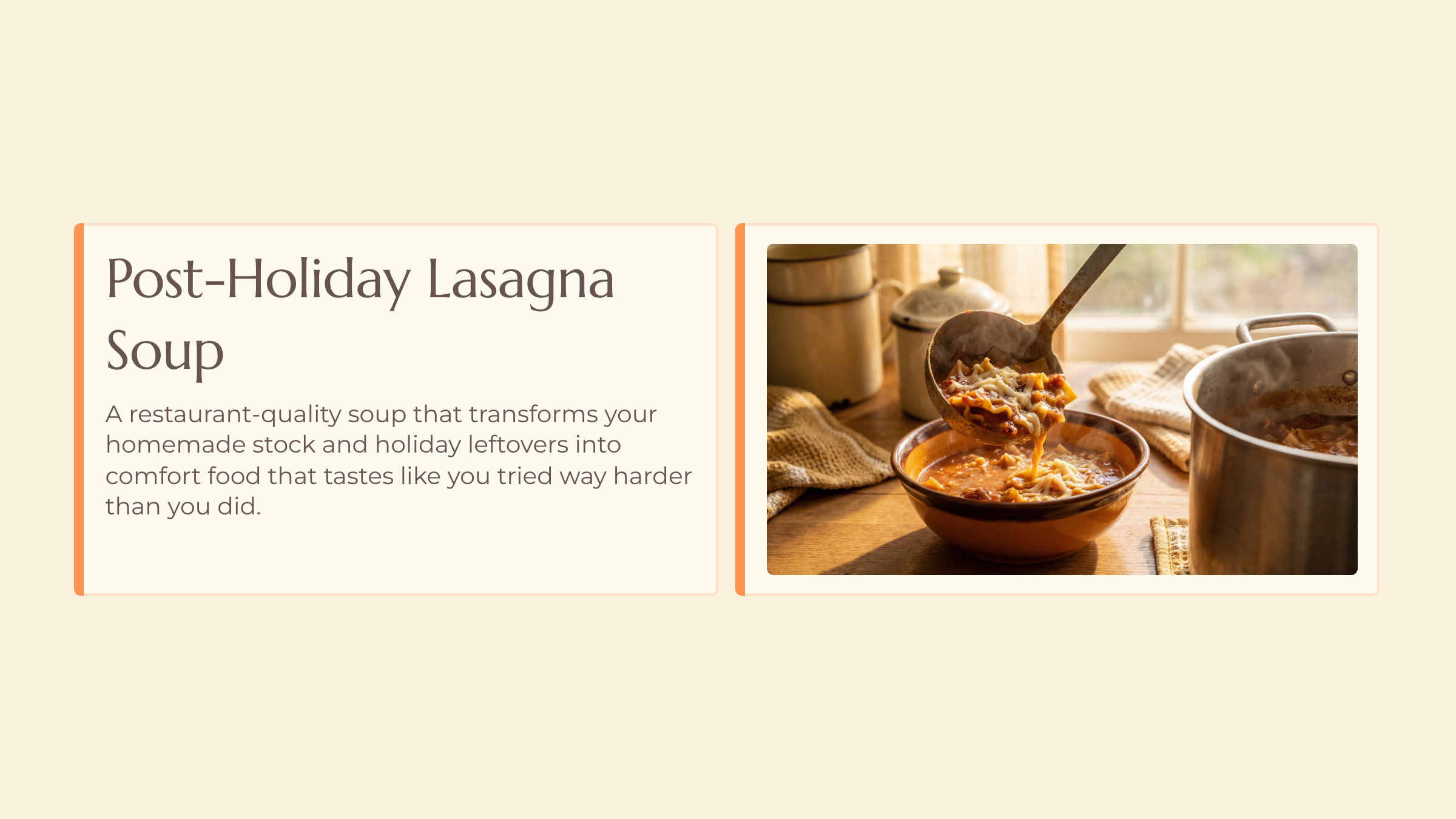
Like last week, I had leftover turkey, a can of tomatoes, and some pasta. Threw it all in a pot with the stock I made from Thanksgiving scraps. Thirty minutes later, I had that viral Lasagna Soup everyone’s been making on TikTok.
You’ve probably seen it—it’s the #6 most-searched recipe on Google right now. And here’s the thing nobody tells you: it only tastes that good because of the stock.
With store-bought broth? It’s fine. With homemade stock? It’s the reason people ask for the recipe.
I just browned some sausage—but you could use leftover holiday turkey, you could use ground beef, honestly you could skip the meat entirely and add white beans. Threw in some diced onion until it was soft. Added garlic and tomato paste, let it cook for a minute until it smelled amazing.
Poured in 6 cups of that turkey stock I’d made, added a can of crushed tomatoes. Brought it to a boil.
Then here’s the part that makes it “lasagna soup”—I broke up lasagna noodles and cooked them right in the pot. They release starch as they cook, which thickens the whole thing naturally. That’s the texture everyone’s obsessed with.
Stirred in some cream (you can skip this, it’s still good without it), added a handful of spinach because I had it.
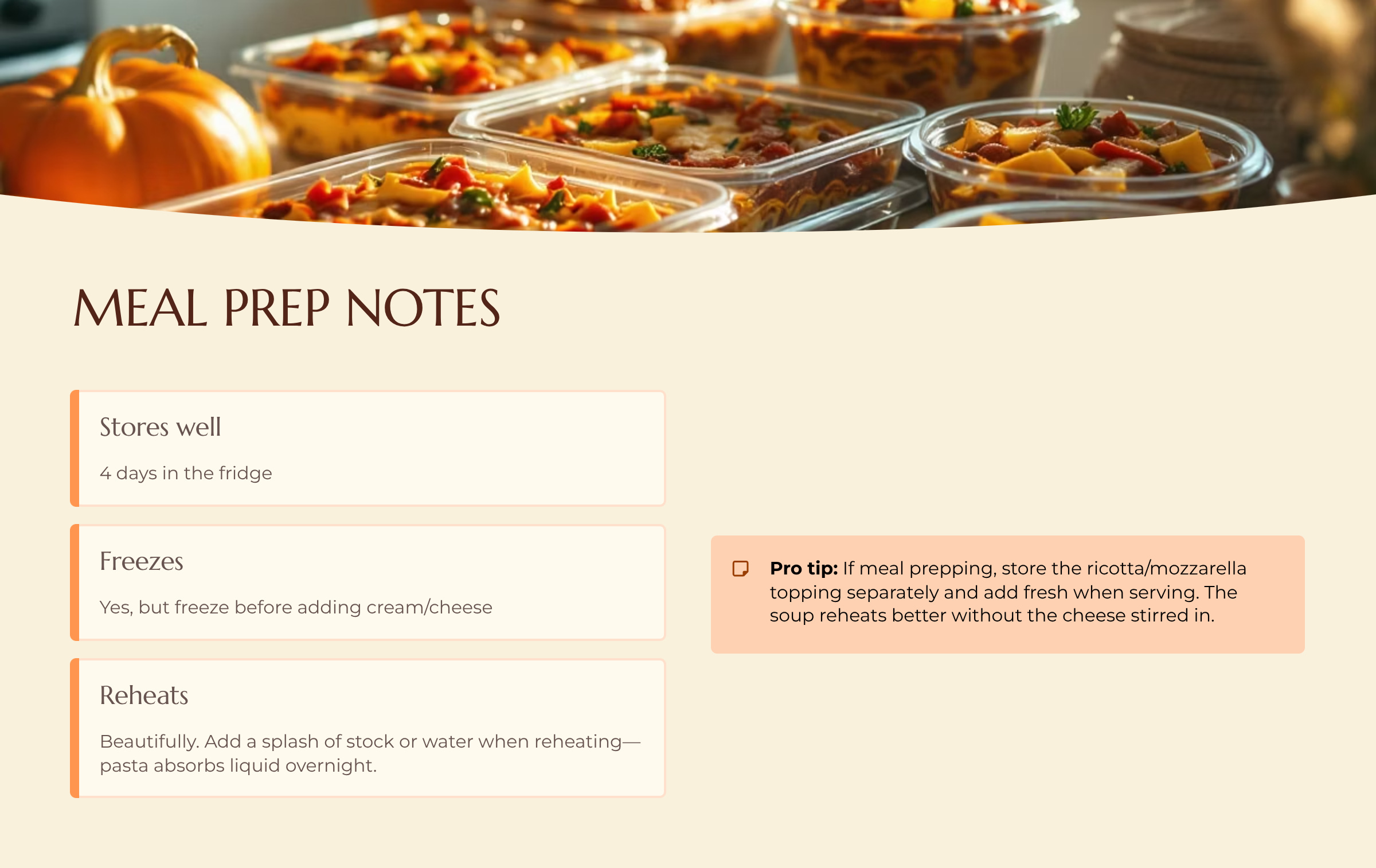
Thirty minutes. One pot. Leftovers for three days.
Served it with ricotta and mozzarella on top because that’s what makes it taste like actual lasagna. But in a bowl. That you made in less time than it takes to order delivery.
That’s what I mean by systems.
You’re not following a rigid meal plan. You’re not eating the same thing every night. You’re using one thing—stock—to make completely different meals depending on what you have and what you feel like eating.
Too tired to cook? Stock + frozen vegetables + pasta = soup.
Feeling ambitious? Stock + rice + pan-seared chicken = risotto.
Have leftovers? Stock + yesterday’s protein + whatever vegetables = completely new meal.
This is what changes when you have stock in your freezer: Dinner is halfway done before you start.
So here’s my question for you:
The data says 85% of us are cooking more because of the economy. Which means we’re already in the kitchen more. We’re already doing the work.
Shouldn’t we get more out of what we’re cooking?
You already paid for those bones. You already bought those vegetables. You already spent the money.
Getting stock out of them isn’t extra work. It’s getting what you paid for.
Here’s what I want to know (seriously, hit reply and tell me):
Do you currently save scraps for stock?
If not, what stops you?
What would make it easier?
I read every response. And I genuinely want to know what’s working in your kitchen and what’s not.
Because systems only work if they fit real life. And I’m building these systems for you.

One more thing before you go.
The HelloFresh report found that 93% of Americans plan to cook as much or more this year. But 64% have wanted to quit dinner.
That gap? That’s where systems live.
You don’t need more motivation. You don’t need more time. You don’t need fancy ingredients or expensive equipment.
You need a framework that works when you’re tired. When you’re broke. When the fridge looks empty and you’ve got nothing left.
Restaurants figured this out decades ago. Now it’s your turn.
Next week, when everyone else is staring at an empty fridge wondering what’s for dinner, you’ll open your freezer and see 20 portions of stock ready to go.
And dinner will be halfway done before you start.
That’s the system.