
I need to be honest with you right from the start.
For years, I thought I had to choose between food that tasted good and food that was good for me. I’m a professional chef, so I know how to make vegetables taste incredible in a restaurant setting - but at home? I defaulted to the same boring steamed broccoli or sad salads that everyone else makes when they’re “trying to eat healthy.”
The irony wasn’t lost on me.
Then something clicked. I was watching a line cook at work absolutely destroy a pan of roasted cauliflower - charred edges, compound butter, herbs - and guests were ordering it like crazy. Not because it was “healthy.” Because it was delicious.
That’s when I realized: I’d been thinking about whole foods all wrong.
The Problem With “Healthy Eating”
Most of us have been taught that eating well means eating bland. Grilled chicken breast. Steamed vegetables. Maybe a sad drizzle of lemon if we’re feeling fancy.
No wonder we can’t stick with it.
The restaurant industry figured this out decades ago - whole foods don’t have to taste like punishment. They can be the most delicious thing on the menu. But restaurants guard these techniques like trade secrets, and home cooks are left thinking they just don’t have the skills to make vegetables exciting.
That’s what I’m here to change.
What This Newsletter Actually Is
Every Thursday, I’m going to share the restaurant techniques that transformed how I eat at home. Not fancy plating. Not expensive ingredients. Just the fundamental skills that make whole foods taste so good that you’ll actually crave them.
This isn’t about meal plans or restrictive diets or cutting things out. It’s about understanding why restaurant food tastes better and applying those same principles to make whole foods the easiest, most delicious option in your kitchen.
Here’s what you can expect:
Every week, you’ll get:
One technique-driven concept (this week: bowls, pasta, roasting)
A downloadable PDF with recipes, grocery list, and meal prep guide
The “why” behind the technique so you can apply it to anything
Real talk about cost, time, and making it work in actual life
This is not:
Another recipe blog where you scroll through someone’s life story
A meal plan that tells you exactly what to eat
Wellness culture disguised as cooking advice
Why Whole Foods?
I’m not going to lecture you about nutrition. You already know vegetables are good for you.
What you might not know is that whole foods - vegetables, grains, legumes, minimally processed ingredients - have a secret advantage: when cooked properly, they’re more satisfying than processed food.
Not in a “wow, this kale salad is so virtuous” way. In a “I genuinely want to eat this” way.
The fiber keeps you full. The variety of textures keeps it interesting. The techniques we use create the kind of deep, complex flavors your brain actually craves. And because you’re working with real ingredients, you can make these dishes taste different every single time.
I’m not trying to get you to eat perfectly. I’m trying to show you that whole foods can compete with - and beat - whatever else you’re tempted to order on a Tuesday night.
This Week: Three Foundational Techniques
I’m starting with three techniques that completely changed my relationship with cooking at home:
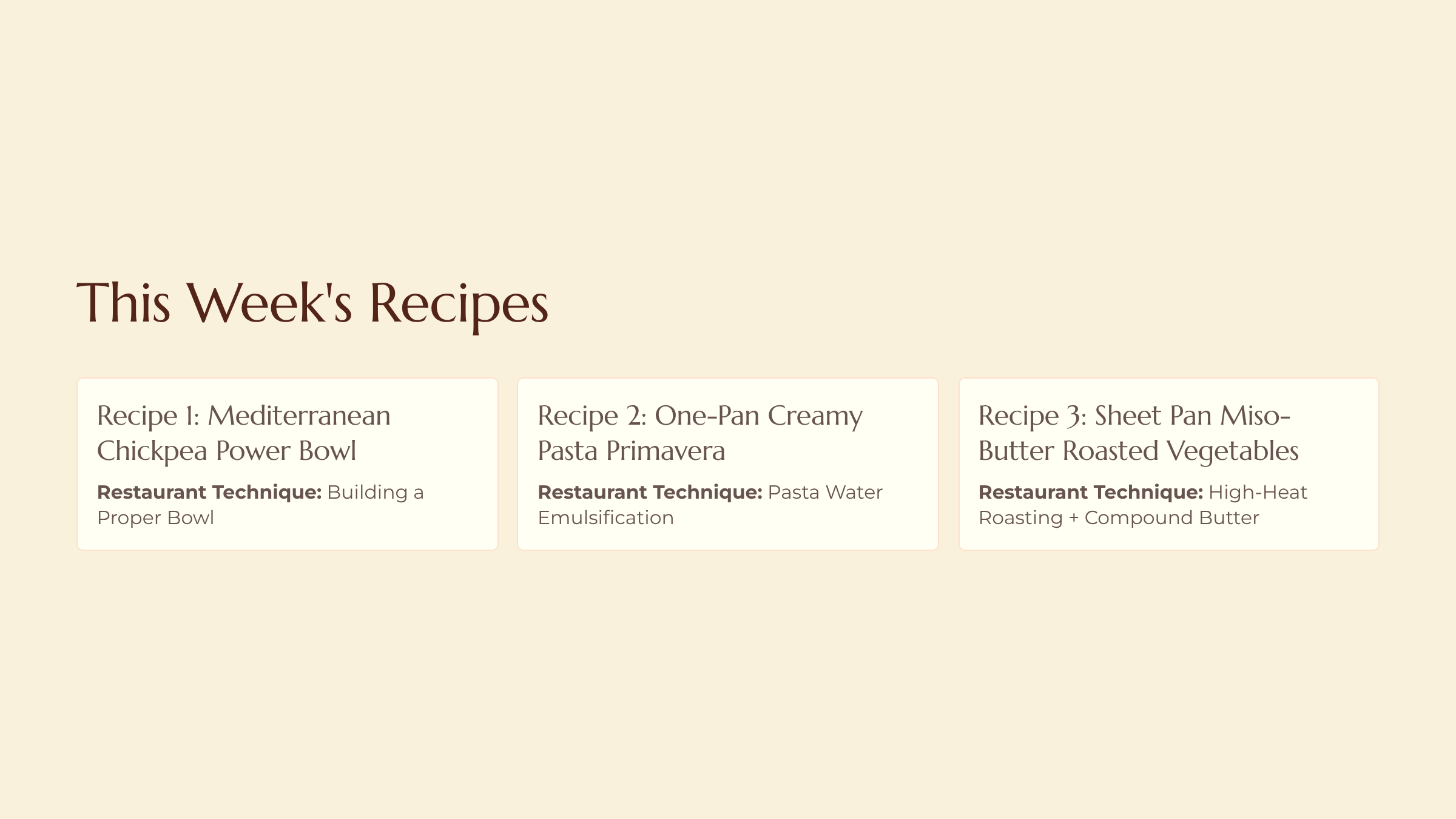
1. Building Proper Bowls - Not just throwing random ingredients in a dish, but understanding the formula that makes bowls satisfying: texture contrast, temperature play, how sauce ties everything together. Once you get this, you can turn any leftovers into something you actually want to eat.
2. Pasta Water Emulsification - The restaurant secret that makes creamy pasta without cream. This is pure technique - it works with any pasta, any vegetables, and it’s faster than waiting for delivery.
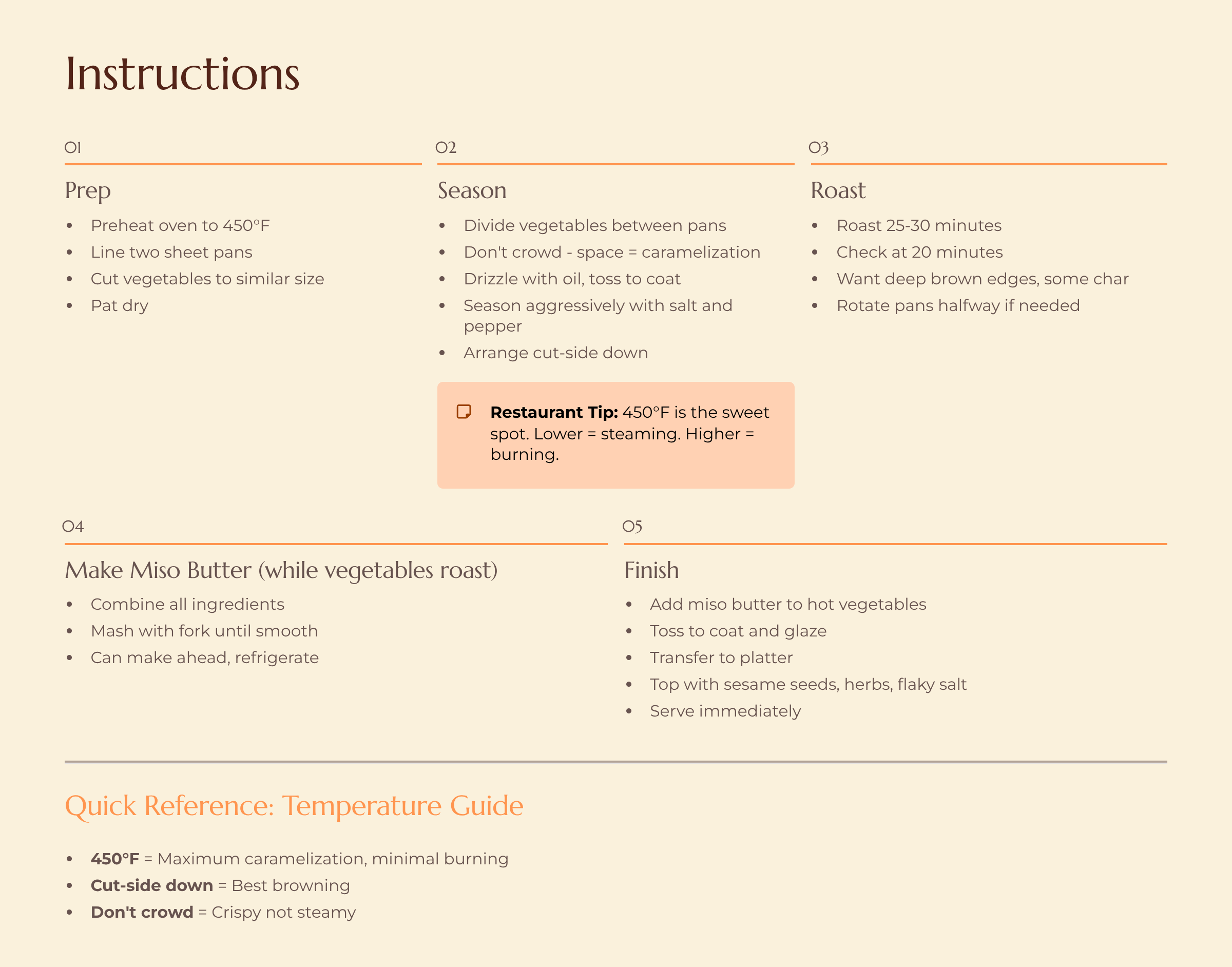
3. High-Heat Roasting + Compound Butter - How to make vegetables taste so good that they become the main event. Forget steaming. We’re talking caramelization, char, and finishing with flavored butter that makes people ask for seconds.
How To Actually Use This Week’s Recipe Guide
Here’s how I use these guides, and how I want you to think about them:
The PDF is designed to live on your phone. Not buried in your email. Not printed and lost in a drawer. Save it to your phone and actually use it.
At the grocery store: I pull up the grocery list while I’m shopping. The checkboxes keep me organized, and everything’s grouped by section so I’m not zigzagging around the store. No more getting home and realizing I forgot the tahini.
In the kitchen: I share the PDF to my iPad or prop my phone up on the counter. Each recipe has the serves/time/cost right at the top so I can decide what I’m making. The “Restaurant Tip” boxes are the things I’d tell you if I was standing next to you while you cooked.
During meal prep: The Sunday prep section tells you exactly what you can make ahead and how long it keeps. I’ll make the miso butter and tahini sauce on Sunday, and suddenly weeknight cooking takes 15 minutes instead of 45.
The goal is for these PDFs to be reference tools you actually come back to - not something you read once and forget about. Think of them like the recipe cards restaurants use on the line: concise, practical, technique-focused.
[Download Week 1: Three Restaurant Techniques That Fixed How I Eat]

What You’ll Actually Learn
By the end of this first week, you’ll understand:
How restaurants build flavor in layers (not just “add more salt”)
Why proper technique matters more than expensive ingredients
How to make vegetables the most exciting part of the meal
The formulas you can apply to any ingredients you have on hand
This isn’t about memorizing recipes. It’s about building instincts.
The Bigger Picture
Over the next few months, we’re going to build a complete framework for how to cook intuitively with whole foods. Seasonal eating. Template-based cooking. How to think like a restaurant chef when you’re staring at your fridge on a Wednesday night.
But we’re starting simple. Three techniques. Three recipes. One week.
If you’re tired of choosing between food that tastes good and food that makes you feel good, this is for you.
If you’re sick of “healthy recipes” that leave you ordering pizza an hour later, this is for you.
If you want to understand why restaurant food tastes better so you can recreate it at home, this is for you.
Let’s fix how we eat.
See you in the kitchen,
Tyler
P.S. - Grab this week’s recipe guide and let me know which technique you try first. Hit reply or tag me @culinarybrief on social - I actually read every response.