
I stopped buying burger ingredients.
Not because I stopped eating burgers. I eat a better burger now than I did when burgers were the plan. The difference is how I think about the trip to the store.
Most home cooks shop for meals. Monday’s dinner, Tuesday’s dinner, Wednesday’s dinner. Three separate ingredient lists. Three separate flavor profiles. Half the produce goes bad by Thursday. I know because I used to watch it happen in home kitchens before I spent 15 years watching professional ones.
Restaurants don’t cook meals. They cook components. A prep cook spends a morning shift building proteins, sauces, grains, and vegetables — all stored separately, all assembled to order. The grill station doesn’t know if that beef is going on a burger, into a bowl, or onto a salad until the ticket comes in.
That’s the system I run at home. And this week, I’m showing you exactly how it works.
The anchor: 3 lbs of 80/20 ground beef.
At $6.70/lb nationally right now, up from $3.96 just five years ago CBS News — every ounce matters. The NRA named the smash burger their #1 trending dish of 2026 Restaurant Dive for a reason: it uses less meat per serving than a traditional burger, cooks faster, and wastes nothing.
Here’s the move most home cooks miss: don’t form all the patties. Take 1.5 lbs for smash burgers. Brown the other 1.5 lbs as loose crumbles with salt and pepper. Those crumbles become three completely different meals by Thursday.
Sunday Prep — 90 Minutes, Four Meals
The Protein: Season 1.5 lbs ground beef with kosher salt and black pepper. Portion into 2 oz balls for smash night. Brown the remaining 1.5 lbs in a cast iron skillet over high heat, breaking into small crumbles. Season with 1 tsp kosher salt and ½ tsp black pepper. Cool and store separately.
The Starch: One sheet pan of gold potatoes, cut to ¾-inch cubes. Toss with 2 tbsp olive oil, salt, pepper, and a diced yellow onion. Roast at 425°F for 28–30 minutes, tossing once at 15. You want deep brown edges — that’s Maillard reaction, the same chemistry that makes your smash burger crust taste like a restaurant.
The Spring Vegetables: Blanch snap peas and asparagus together. Here’s the technique: 90 seconds in aggressively salted boiling water, then straight into an ice bath. This locks color, preserves crunch, and gives you vegetables that hold up for 5 days in the fridge. Every restaurant does this. Almost no home cook does.
The Sauce: Gochujang aioli. Mix ¼ cup mayo, 2 tbsp gochujang, 1 tbsp rice vinegar, 1 tsp sesame oil, 1 clove minced garlic. Five minutes. Stores 7+ days. This goes on everything — burgers, bowls, salads, melts.
Meal 1 — The Smash Burger (Tuesday)
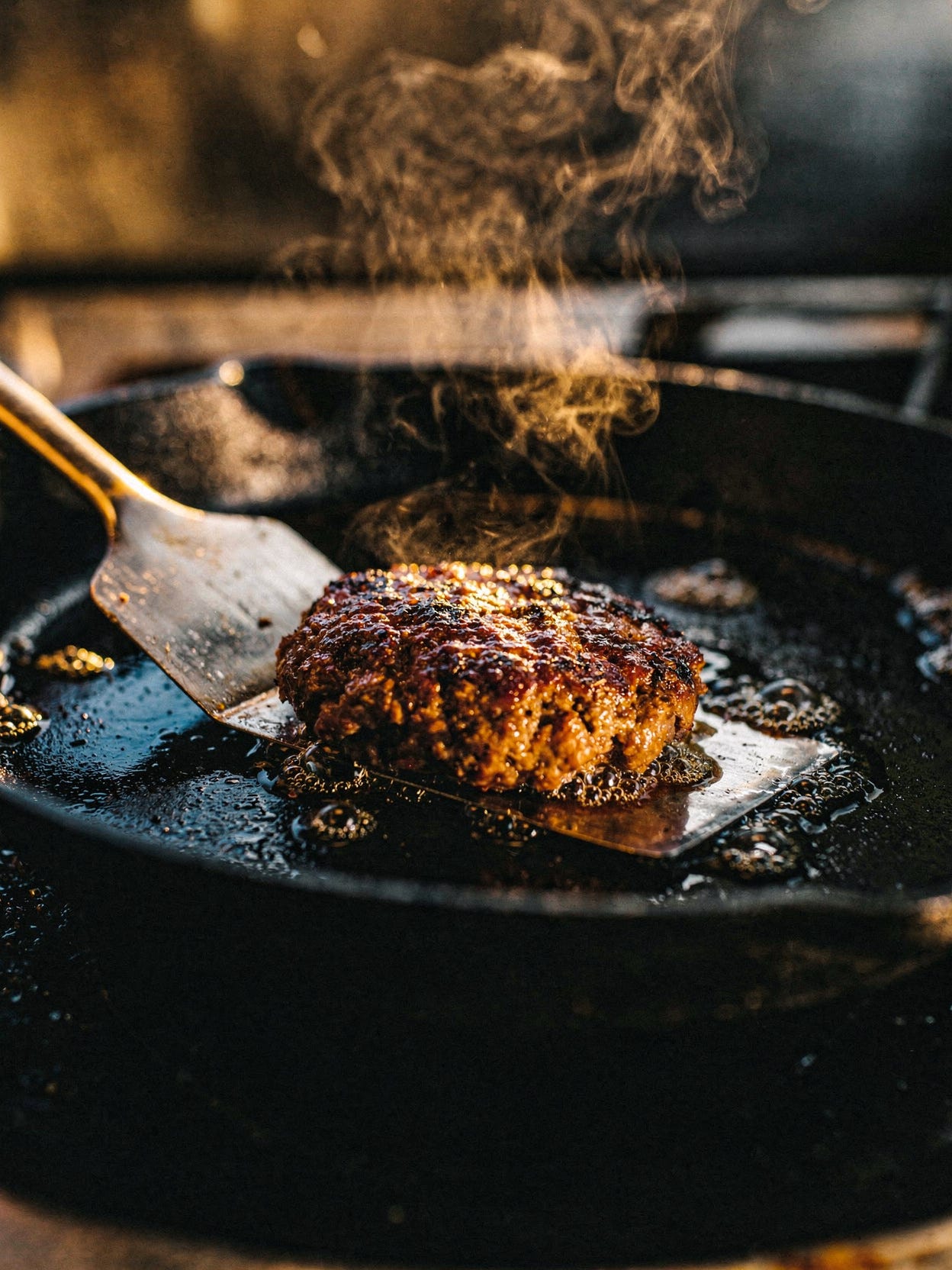
Screaming hot cast iron. I mean 500°F+ surface temperature. That’s the part everyone gets wrong — your pan isn’t hot enough. Place a 2 oz ball on the surface and press ONCE with a stiff spatula. Hard. You’re creating maximum surface contact for maximum crust. Don’t touch it for 90 seconds. Flip. Add sharp cheddar. 60 more seconds.
Two patties per sourdough bun. Gochujang aioli. Quick-pickled ramps if you can find them at the farmers market (they’re only around for another 2–3 weeks). Otherwise, pickled red onion works — same technique, same acid preservation.
This is a heat management exercise. The crust on a smash burger IS the flavor. No crust, no burger. And that crust only happens above 450°F, which means preheating your cast iron for a full 5 minutes on high before the first patty touches the surface.
Meal 2 — K-BBQ Beef & Potato Bowl (Wednesday)
Warm the loose beef crumbles in a skillet with 1 tbsp soy sauce and 1 tsp honey. Toss with roasted potatoes and blanched snap peas. Drizzle with gochujang aioli. Sesame seeds if you have them.
Same beef. Same potatoes. Same sauce. Completely different meal. This is what component prep does — the sauce changes the identity, not the ingredients.
Meal 3 — Steakhouse Spring Salad (Thursday)
Cold roasted potatoes over mixed greens. Chilled beef crumbles. Blanched asparagus and snap peas. Thin the gochujang aioli with 1 tbsp rice vinegar to make a dressing.
Pro tip on those cold potatoes: cooling cooked potatoes converts some of their starch to resistant starch — it passes through your gut undigested, feeding beneficial bacteria. Same calories going in, more fiber coming out. Restaurants don’t serve cold potatoes on purpose, but your meal prep system just accidentally created a gut-health upgrade.
Meal 4 — Sourdough Beef Melts (Friday)
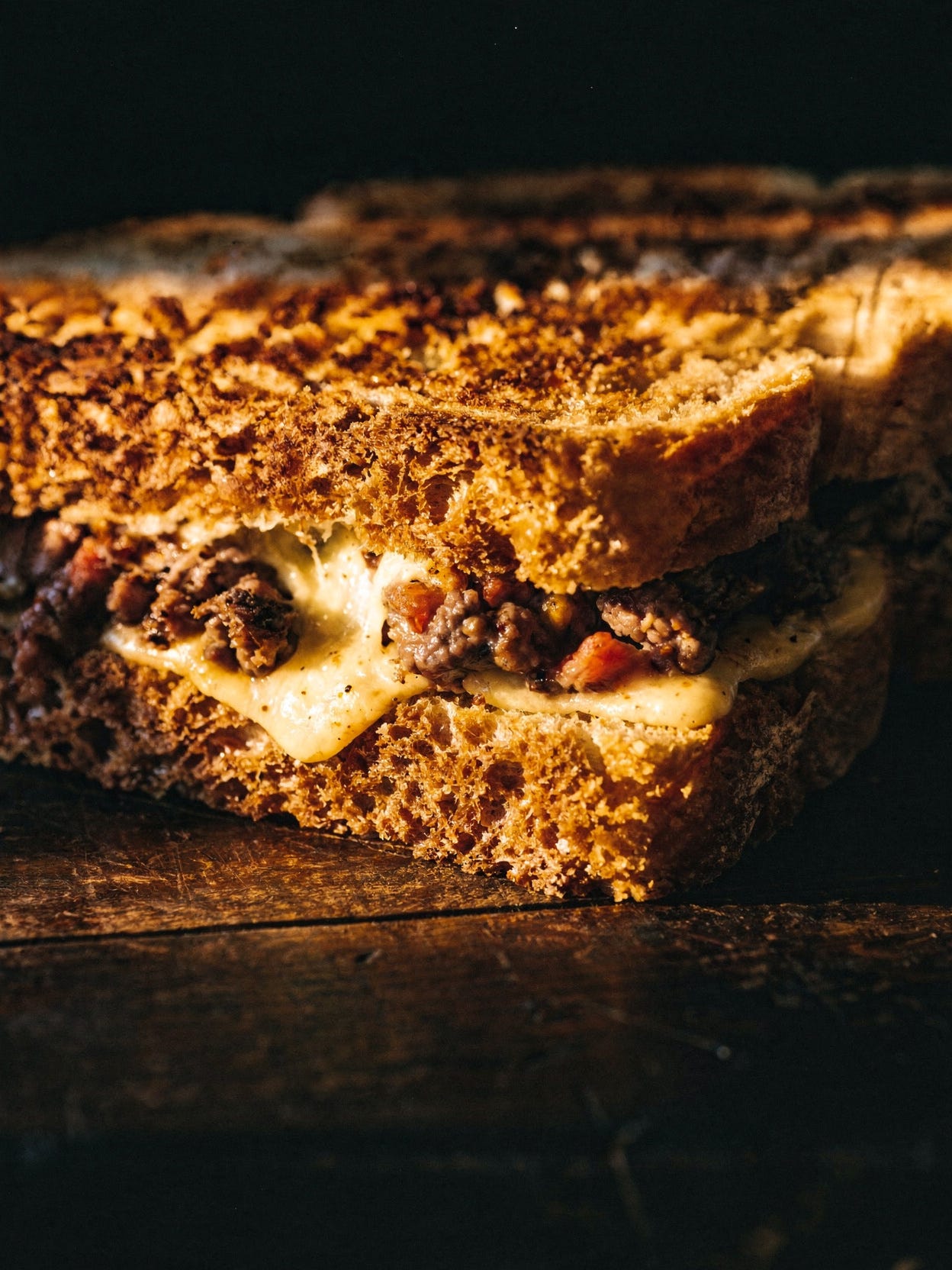
Sourdough bread, beef crumbles, leftover roasted onions from the potato pan, sharp cheddar. Open-face under the broiler until bubbly — 3 minutes, watch it closely. Side of remaining asparagus.
The Math
3 lbs 80/20 ground beef: $20.10 2 lbs gold potatoes: $2.50 1 lb snap peas: $3.50 1 bunch asparagus: $3.00 1 yellow onion: $0.75 Sourdough bread/buns: $5.00 Sharp cheddar (8 oz): $3.50 Gochujang, mayo, pantry staples: ~$2.00
Total: ~$40.35 for 8 servings across 4 meals. That’s $5.04/serving.
The same smash burger at Five Guys runs $10.69 before fries. A beef bowl at Chipotle is $11+. You’re eating four restaurant-quality meals for what one fast-casual dinner costs.
The bigger point: I didn’t go to the store for burger night. I went to the store for a system. The burger is the draw — it’s the reason you’ll actually want to cook on Tuesday. But the loose crumbles, the roasted potatoes, the blanched vegetables, and the gochujang aioli are what feed you through Friday without ordering delivery.

Your food doesn’t get boring. Your format does.
What’s the one meal you always default to ordering instead of cooking? Hit reply — I’m building next week’s system around whatever you tell me.
P.S. — If you made last week’s recipe, I want to hear about it. Drop me a reply. I read every one.