
Tuesday night I made a stir-fry with Cuban seasoning. On purpose.
The pork was already in the fridge — slow-cooked in mojo marinade since Sunday. Garlic, citrus, cumin, oregano. I threw it in a screaming-hot wok with asparagus, ginger, and soy sauce. It shouldn’t have worked. It absolutely did.
That’s not a happy accident. That’s how professional kitchens think about flavor.
A marinade is not a cuisine assignment.
Most home cooks treat a marinade as a lock — Cuban mojo goes on Cuban food, teriyaki goes on Asian food, chimichurri goes on Argentine food. Restaurants don’t think that way. A professional kitchen looks at a flavor base and asks: what are the active components, and where else do those components work?
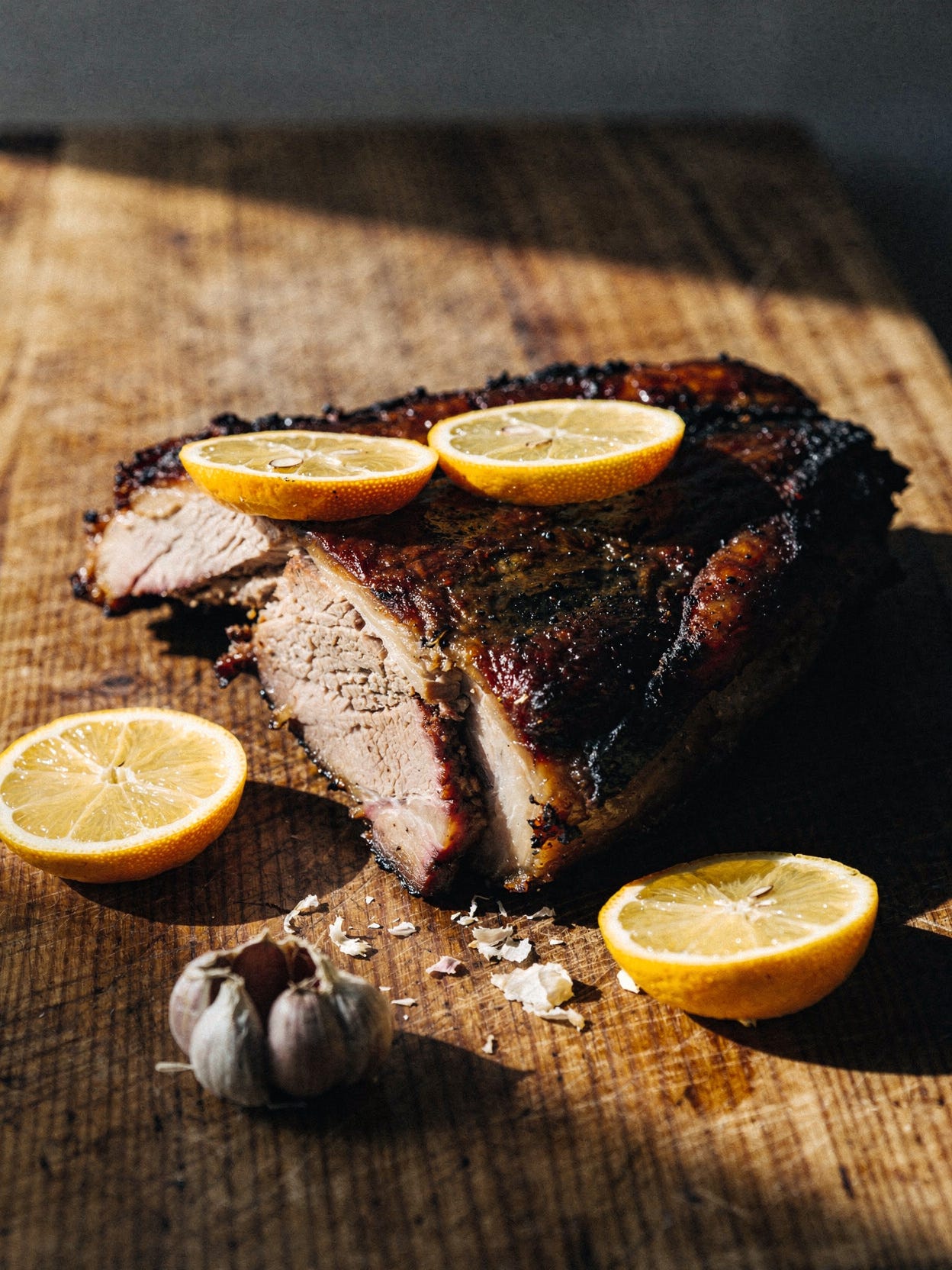
Mojo is citrus, garlic, and fat. Orange and lime provide acid. Garlic provides depth. Oregano and cumin provide earthiness. Olive oil carries everything and builds the crust when it hits a hot surface.
Acid and garlic work in almost every cuisine on earth. The citrus in mojo doesn’t read as “Cuban” to your palate — it reads as bright. The garlic doesn’t say “Latin” — it says savory. When you add ginger and soy sauce to a pan that already has mojo-marinated pork in it, the acid from the mojo brightens the soy, the garlic doubles down on the ginger, and the whole thing tastes intentional. Because it is.
This is the cross-utilization principle. One flavor base, multiple applications. Restaurants do it because they can’t afford to waste a batch of marinated protein. Neither can you.
Here’s how I do it.
Start with a 4–5 lb pork shoulder on Sunday. The cut matters — Boston Butt has enough fat and connective tissue to stay moist through reheating all week. Leaner cuts dry out by Wednesday.
The mojo: 1 cup orange juice, ½ cup lime juice, 8–10 cloves minced garlic, 1 tbsp dried oregano, 1 tsp cumin, 1 tsp salt, ½ tsp black pepper, ¼ cup olive oil. Score the shoulder with 1-inch slits and rub the marinade in. Refrigerate overnight — minimum 8 hours, up to 24.
Pat the surface completely dry before searing. Dry surface = crust. Wet surface = steam. Sear 3–4 minutes per side over medium-high until you have a deep mahogany crust, then transfer to a slow cooker with the remaining marinade. Low for 8–10 hours. It’s done when it pulls apart without any resistance.
Night one: slice thick steaks from the intact outer portion. Serve with a snap pea and radish slaw — 8 oz snap peas sliced thin, 4–6 radishes, fresh mint, lemon juice, olive oil. The slaw cuts the fat of the pork. That’s the point.
Shred everything remaining. Store submerged in the cooking juices. That liquid is now your flavor infrastructure for the week.
The three spin-offs:
Night two — wok over high heat, neutral oil, 1-inch asparagus pieces and grated ginger, 2–3 minutes until bright green. Add 2 cups shredded pork with some of its juices. Splash of soy sauce. Sesame oil if you have it. Over jasmine rice. Fifteen minutes.
Night three — cast iron, thin coat of oil, shredded pork in a single layer. Don’t touch it for 3–5 minutes. The edges will go golden and start to crackle. That’s the Maillard reaction happening to already-cooked meat. Warm corn tortillas, sliced radish, cilantro, lime. Double-stack the tortillas — the juicy pork will blow out a single layer.
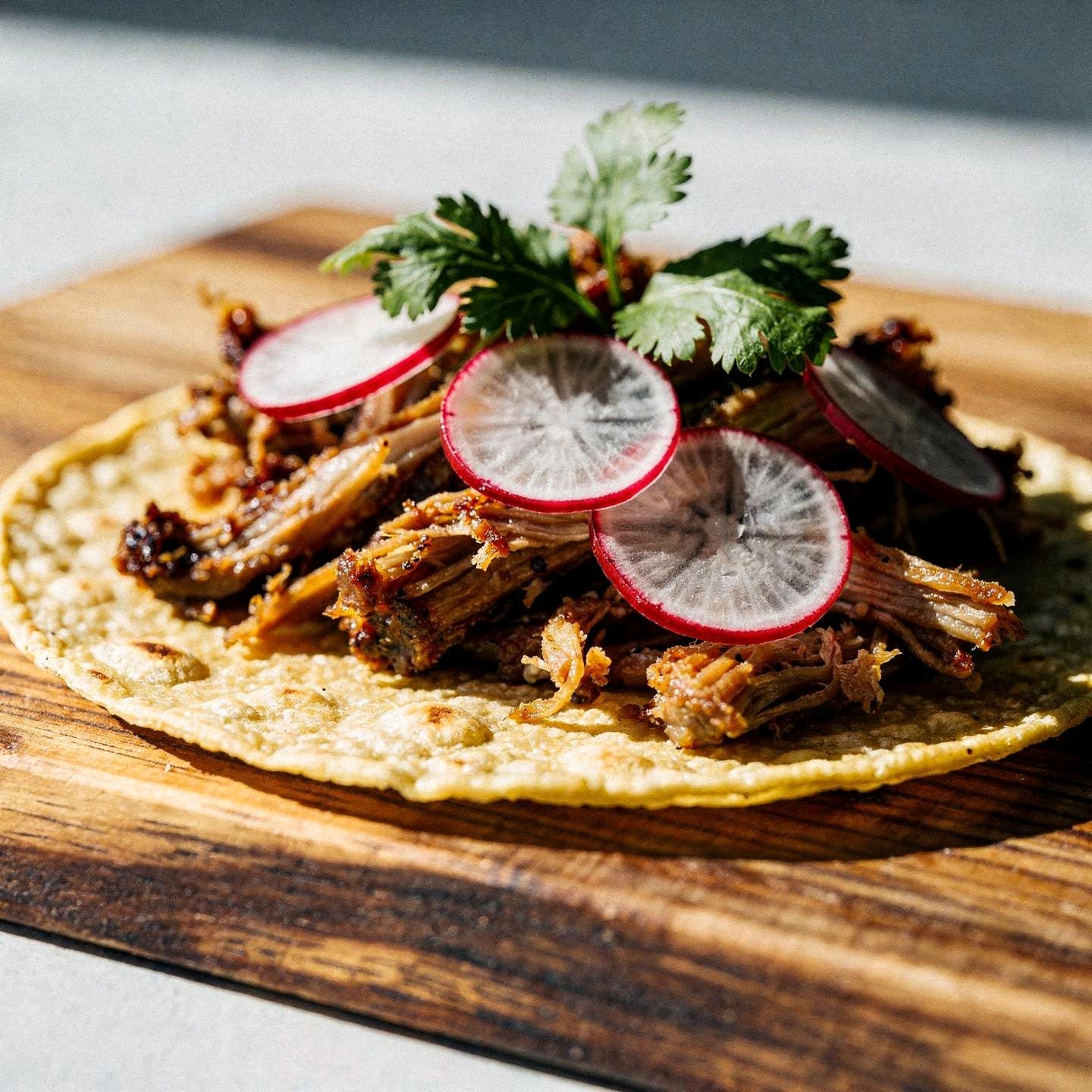
Night four — thick sourdough toasted until sturdy. Shredded pork reheated in a spoonful of its braising juices until glazed. Poached egg — gentle simmer, splash of white vinegar, 3 minutes exactly for a runny yolk. Stack and drizzle with reduced mojo juices or hollandaise. This is a $17 brunch plate. You made it on a Thursday night with leftovers.
The math:
4–5 lb pork shoulder: ~$13. Mojo ingredients: ~$3. Vegetables, tortillas, sourdough, eggs across the week: ~$10. Total: $26 for four dinners for two. That’s $3.25 per serving. The brunch plate alone runs $17–22 at a restaurant.
Pork shoulder delivers roughly 22g protein per 3 oz serving. Pair with rice or bread and you’re at a complete meal.
The principle transfers to any protein you’re batch cooking. A citrus-garlic base on chicken thighs works in tacos, in a grain bowl, in a pan sauce, in fried rice. You’re not locked in. You’re building infrastructure.
What’s one marinade you keep coming back to? Hit reply — I’m curious whether people are already doing this without realizing it.
P.S. The full recipe card for all four nights — including exact slaw ratios and the carnitas crisping method — is attached below. Try the stir-fry on night two. I think that’s the one that surprises people most.

[Disclosure: Some links below are affiliate links. I only recommend tools I actually use.]
Lodge 6-Quart Cast Iron Dutch Oven — For the initial sear. Cast iron holds heat evenly across the surface, which is what gives you a consistent crust on a large cut like pork shoulder. I use this for both searing and braising.
Crockpot 7-Quart Slow Cooker — A 4–5 lb shoulder needs room. A cramped slow cooker traps steam against the meat and prevents proper braising. Go bigger than you think you need.
Microplane Premium Zester — For the ginger in the stir-fry. Grating ginger on a Microplane instead of mincing it releases more juice and distributes it more evenly through the pan. Faster too.